





Quantum Leap – August 25, 2025
Still in its nascent stages, quantum computing is growing rapidly and will need real estate
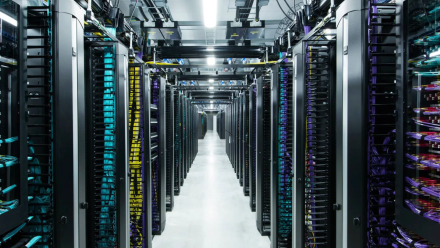
A few months ago, this column turned its attention to the data center boom, driven largely by artificial intelligence and cloud computing. These sectors, with their seemingly insatiable appetite for data capacity, may be giving rise to hundreds of single-story, rectangular buildings in various stages of development, but there’s a new guy in town.
“Just as artificial intelligence turned the data center sector into a gold mine, quantum computing is already ramping up to its own real estate revolution,” wrote CNBC’s Diana Olick earlier this month.
Quantum computing uses quantum mechanics to solve problems surpassing the ability of the most powerful classical computers. This is due in part to the nature of quantum computing’s information processing. Whereas classical computing uses bits to represent information as either a “0” or a “1”, quantum computing uses “quantum bits” or “qubits,” which may be “0,” “1” or both at once.
“This phenomenon, known as superposition, allows a qubit to exist in multiple states simultaneously,” JLL’s Andrew Batson and Daniel Thorpe wrote in a recent report. “This principle enables quantum computers to process multiple possibilities at once, performing calculations in parallel.”
As an illustration of quantum’s computing speed, wrote Batson and Thorpe, “Google’s quantum computer recently solved a calculation in under five minutes that would take one of today’s fastest supercomputers 10 septillion years to solve, a number that vastly exceeds the age of the universe.” They noted that quantum represents “an entirely new way of computing,” separate from AI, which is based on classical computing.
“Until now, these [quantum] computers have mostly lived at academic or government facilities, because they have had limited practical applications,” Olick wrote. “That’s also why investment in quantum has lagged AI by about a decade.
“But quantum computing is suddenly now advancing quickly and becoming commercially viable. As a result, it now needs its own real estate.”
At present, quantum is almost a cottage industry compared to AI. Citing the JLL report, Olick noted that quantum companies brought in less than $750 million in revenue last year, while startups focused on quantum technology collectively attracted about $2 billion in funding. But forecasts suggest that investments in quantum could ramp up to $20 billion annually by 2030 and revenues could reach $100 billion by 2035, she added.
The linchpin for accelerated growth in quantum computing adoption, according to Batson and Thorpe, will be usefulness. “Quantum advantage will be achieved when a quantum computer demonstrably provides a significant, practical benefit over classical computing for a specific, useful problem. This benefit can be speed, cost, accuracy or efficiency.”
For the moment, quantum computing activity will center around hubs with established ecosystems, as opposed to data center strongholds such as Northern Virginia or the Phoenix metro area. Chicago, where Related Midwest is developing the Illinois Quantum and Microelectronics Park, is one such hub.
One argument holds that quantum will remain yoked to hubs for the foreseeable future. However, another scenario envisions quantum moving into the data center space. “Quantum computers will likely require access to data center cloud infrastructure, and there will probably be efficiency gains by integrating AI and quantum within the same facility,” Batson and Thorpe wrote.
The integration may not be seamless, though. Quantum computers take a different physical form than their counterparts powering AI or the cloud and therefore cannot be accommodated by run-of-the-mill data center racks. They also need electromagnetic shielding above and beyond the requirements of classical computers.
Yet peaceful coexistence between quantum real estate requirements and today’s data centers isn’t out of the question. “The primary question I’m getting from clients is, does it make existing data centers obsolete? And the answer to that is no,” Batson told Olick. “Quantum computing is accretive to the existing data center infrastructure. Is it redevelopment of existing? Is it brand new? It’s all of the above.”