




Manufacturing’s State of Flux – Dec. 22, 2025
Market forces and policy shifts mean changes in what new manufacturing projects will produce. Where these projects are located isn’t expected to change
The change in administrations at the beginning of 2025 signaled dramatic policy shifts in many aspects of the economy. Among these were changes to incentives designed to spur investment in domestic manufacturing: less a matter of how much support is being provided than of what sectors are being targeted.
Between 2021 and 2024, the “incentive-driven policy cycle,” as defined by the Inflation Reduction Act, CHIPS Act and Bipartisan Infrastructure Law, catalyzed “a surge of manufacturing announcements concentrated in select industries such as semiconductors, electric vehicles (EVs) and clean energy,” Savills says in its new North America Manufacturing Report. “That wave was already losing momentum by 2024, as challenges in the EV market exposed limits to the incentives-led model.”
The recent news that Ford Motor Company would scrap several models of EVs and take a $19.5-billion writedown as it retooled to emphasize conventional gas-powered and hybrid vehicles is only the most recent illustration of the auto industry’s retreat from battery power. Mirroring this illustration of market forces is the phasing out of the federal $7,500 EV tax credit and the 30% credits for residential and commercial solar installations, as contained in the One Big Beautiful Bill Act of 2025.
Simultaneously, the OBBBA introduced “100% rapid depreciation for new equipment and facilities, alongside $150 billion in new defense funding, including shipbuilding and munitions,” Savills reported. “It also increased the semiconductor investment tax credit from 25% to 35%.”
Taken together, “these changes mark a pivot toward cost recovery and defense-driven industrial policy, though the long-term direction remains uncertain,” according to the report. “These policy shifts also align with where early-stage innovation capital has been moving, particularly toward defense, energy and advanced industrial technologies.”
Nearly half of the new manufacturing jobs announced in 2025 were driven by the aerospace and defense sector, “reflecting the continued national emphasis on security and advanced production,” Savills said. “This shift reflects not only domestic policy but a broader global backdrop.”
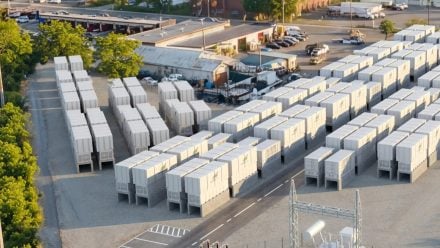
Another 25% of announcements were linked to grid and energy or digital infrastructure verticals. Both are closely tied to the growth of artificial intelligence.
This past year has seen major announcements from Tesla, Hitachi Energy and Eaton focused on meeting rising demand from the grid. “At the same time, Jabil is producing data center hardware in North Carolina, underscoring how AI’s rapid expansion is shaping industrial investment,” Savills reported. “According to BloombergNEF, data centers could account for 8.6% of total U.S. electricity demand by 2035—more than double their 3.5% share today.”
Even as manufacturing sectors are reordered in terms of priority and viability, there’s an element of longstanding familiarity in where the manufacturing is or will be concentrated. “Despite shifts in policy and industry mix, the Sun Belt, Southeast and Mid-South remain at the center of new project activity,” according to Savills. “Competitive costs, workforce depth, infrastructure and available land keep these regions at the top of the list for site selection.”
The top five states for new manufacturing projects all fit this paradigm: Georgia, Texas, North Carolina, Arizona and Tennessee. Among them, these states account for more than half of manufacturing job announcements since 2021—a tally that excludes projects that were put on hold or canceled. In Savills’ companion Industrial State of the Market Q3 2025 report, a chart of notable manufacturing commitments in 2025 shows the same bias toward the southern half of the continental U.S.
“This locational pattern is expected to hold even as the sectors driving manufacturing growth evolve,” Savills concluded.