2026 Multifamily Leadership Series: Gregory MacDonald, Ballast

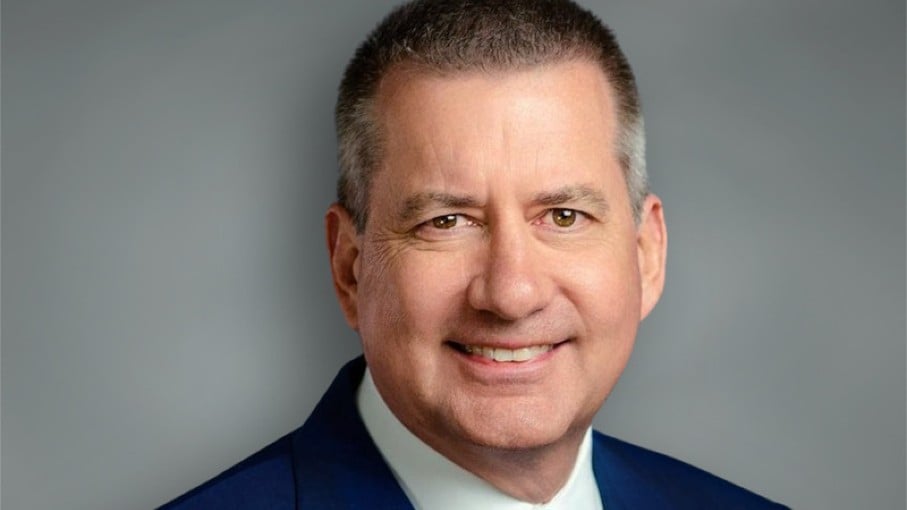
Multifamily is the focus in the fourth year of Connect CRE’s annual Leadership Series. We invited 18 apartment heavyweights to provide their unfiltered views of the current market, its challenges and opportunities. The insights of these power players have been collected in a downloadable report, and we’re also presenting them individually, in alphabetical order. Here are insights from Gregory MacDonald, Co-Founder and CEO, Ballast.
Is the equity environment improving for development?
Capital is coming back to San Francisco multifamily, but it’s disciplined. Investors want to see the full path to execution before they commit, and it’s flowing toward operators who can run buildings versus firms who simply allocate. Our successful acquisition of 75 assets with Brookfield is a marker of that shift and has helped pull other investors off the sidelines in recent months.
For ground-up development, the math still doesn’t work in most of the city. Construction and financing costs remain high enough that new projects pencil only in narrow cases, and it’s the equity gap, not debt availability, that keeps most of them on the shelf. The environment is better than it was a year ago, but capital is flowing towards stabilized and value-add acquisitions and continues to ignore ground-up development opportunities.
This doesn’t mean we’ve stepped back from adding housing. Where it makes sense, we’re creating new units inside buildings we already own via the Accessory Dwelling Unit (ADU) program. California has made that path more workable, and it lets us add supply without the land cost and entitlement risk that make ground-up so difficult in San Francisco. With all that said, the economics to justify ADU construction is still marginal at best. Rents must continue to grow to make the math work.
Has the debt market changed compared to a year ago, and if so, how?
Yes, and meaningfully. A year ago, rate volatility was the dominant factor in every financing conversation. The 10-year was swinging enough that underwriting a deal felt like guesswork, and anything reliant on floating-rate debt carried real risk.
The tone today is steadier. Banks have come back to the table, debt funds are active and competing, and spreads have tightened. Lenders are still selective, however. They want real cash flow and a sponsor who can manage and handle surprises, but they’re willing to engage. In a market like San Francisco, the story can’t just be that rents are recovering. You have to justify the durability of in-place NOI and explain how the asset will perform down to the unit level. We still favor fixed-rate where we can as it eliminates a portion of deal-related risk.
Absorption has increased this year. Is that due to a slowdown in development or other factors?
Both, but the supply side is the structural piece. Very little new product has come online in San Francisco because the development that would have followed normal cycles was choked off during COVID and never fully restarted. When a city sits at 95% to 96% occupancy with almost no new stock, absorption climbs and rents follow.
Real demand has come back as well. AI hiring has been a real engine, return-to-office is pulling people back to the urban core, and there’s renewed appetite for city living that you wouldn’t have expected a few years ago. Absorption isn’t uniform across the market, however. The assets capturing upside right now are located in superior locations with strong management. Demand creates the opportunity, but location and operational capability determine whether you capture it.
Will we see an increase or decrease in rent prices this year?
Our view is that rents are most certainly heading higher. San Francisco has had the strongest annual rent growth in the country over the past year, with one- and two-bedroom rents both up double digits. Limited supply, tight occupancy, and real demand are all still in place and will push rates ever higher.
That said, growth will look different by neighborhood. Some submarkets are riding AI employment and return-to-office directly; others move more slowly and stay more price-sensitive. The good news is that San Francisco is not an income constrained market. Even though job growth has been tepid in the Bay Area over the past few years, high-income job growth has been quite strong, especially relative to other markets. Investors sometimes focus too intently on job growth but focusing on what types of jobs are created, and the associated income creation, is arguably more important.
Ballast is a vertically integrated real estate investment and operating platform with more than $3 billion in AUM and a primary focus on value-add, middle-market multifamily assets located primarily in San Francisco, where it is headquartered.
Click here to read the series.
2026 PDF DownloadRelated Leadership Stories