
In Los Angeles, an initiative is taking shape, poised to address one of the city’s most pressing challenges: affordable housing. Executive Directive No. 1 (ED1) in Los Angeles is the first executive order Mayor Bass signed in December 2022 shortly after being sworn into office. The initiative looks to tackle housing accessibility head-on.
In order to streamline the permitting process for qualifying 100% affordable housing projects, ED1 applies to developments with five or more units meeting specific criteria. These include having all units priced at 80% of the Area Median Income (AMI) or lower, as per the U.S. Department of Housing and Urban Development rent levels. Alternatively, projects can have mixed-income units, with a maximum of 20% of units priced at 120% AMI, provided the remaining units are at 80% AMI or lower. Under ED1, Los Angeles city staff are mandated to approve applications for eligible housing developments within 60 days and issue building permits within five days.

“I think ED1 is very transformational for how affordable housing is going to be built in Los Angeles, for hopefully many years to come,” said Joshua Hamilton, senior vice president of Century Housing Corporation, a private, nonprofit lender to developers building affordable housing.
ED1 was designed with the intention of expediting the approval process for projects that are entirely dedicated to affordable housing, streamlining their path to realization.
“[ED1 is] quite ambitious from the standpoint of removing the red tape to get these projects through the approval process on a fast-track basis,” said David Waite, partner at Cox Castle and an expert in obtaining RE permits. “When you compare the ED1 program to prior years before ED1 existed, the City of Los Angeles has nearly doubled the number of 100 % affordable units that have been approved.” Waite thinks ED1 has been successful from a permitting standpoint.
“The developers in Los Angeles are really gravitating towards this execution because they can get bonus density, more units and height variances,” said Jonathan Lee, executive managing director of Structured Finance Group at Colliers. “Plus they don’t have to provide much parking. So the project generates better returns.” For that very reason, Lee said ED1 has attracted some market-rate developers to the affordability arena.
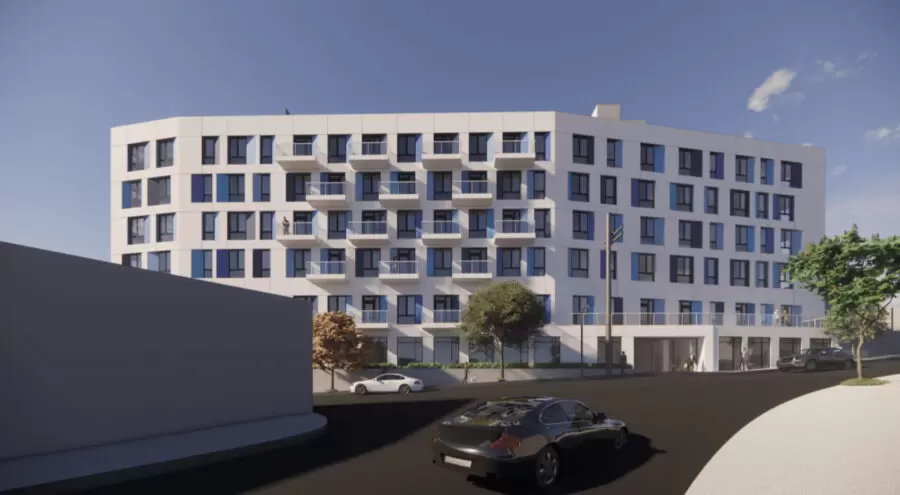
One of the developers wading into Los Angeles’ affordable housing market is Andrew Slocum, principal of Green Development Company. Slocum paired with Terry Harris to develop a seven-story project on West Court Street.
“Part of our mission as developers is to put affordable housing in neighborhoods that typically don’t have affordable housing,” said Slocum. “We call areas like Echo Park and Silver Lake high resource areas, they have a lot of amenities for the public and businesses that you wouldn’t find in a typical area where affordable housing would be built, such as South LA or East LA.”
Jeff Zbikowski, founder and Principal of JZA Architecture, a Los Angeles-based architecture and design firm specializing in the residential sector, has been busy with ED1 projects since the get-go. “Almost all of our projects now are 100% affordable, we used to have maybe 40, 50% of those projects be market rate. And now it’s 95% ED1.”


However, as good as it sounds, ED1 comes with its own challenge. Parking space is one of them. Developers can bring down their construction costs by not putting parking.
“None of my projects have parking. They are all around transit,” said Slocum. “We do understand that there may be a bit of pain throughout LA as no-parking buildings become a reality. But I think that’s the difference between the old-school developers and the people who see the future coming.”
From the financing standpoint, having parking space can be good and bad from a lender’s perspective. “The projects that have parking are a little easier to understand and a little easier to make a decision about because we expect that almost every person that lives in Los Angeles is going to own a car,” said Hamilton. “We have to take a hard look at it because we have to look at the surrounding environment and the public transportation infrastructure.”
The decision on parking sometimes depends on specific areas, “As a lender, you have to look at certain aspects that will come along with no parking.” said Tracey L. Burns, vice president of Construction Lending at Century Housing Corporation. “So if we’re looking at projects that are in, for example, the Koreatown area of Los Angeles, there’s plenty of transportation there. We have the Metro and the busses. So that area is a little bit different because we have a lot of transportation there. But when we’re looking at projects that are in, the San Fernando Valley, that may be different because there’s not a lot of public transportation in that area.”
Things might be a bit different from the design perspective. “I try to encourage my clients to provide parking and amenities when it’s feasible,” said Zbikowski. “At the end of the day, they need to make money and the project needs to pencil. You’re sacrificing the visibility and livability of your units if you’re not providing these things.”
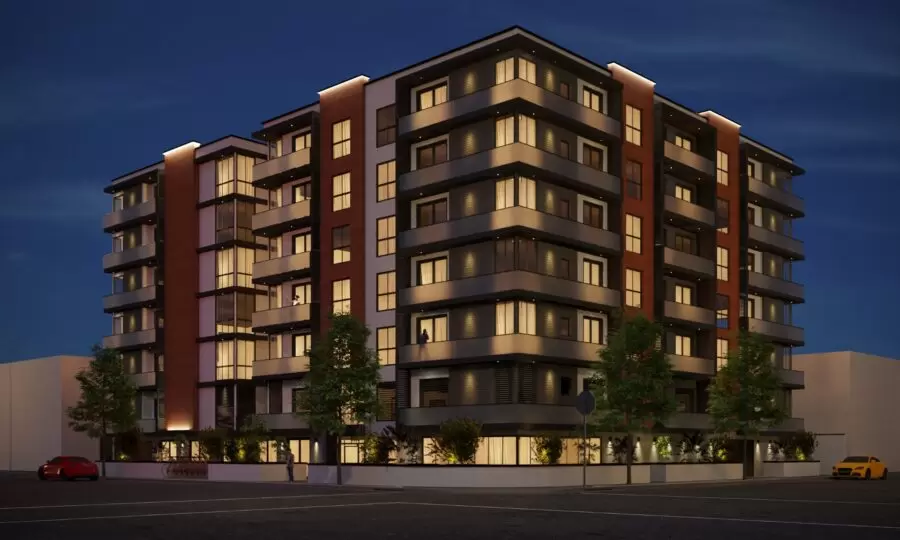

There are other parameters besides parking, “Construction cost and land cost remain two big impediments,” said Waite. “Land is very expensive. And construction and labor costs are extremely expensive. The construction materials costs have stabilized to some degree, but the labor cost is still very high throughout California. When you look at a public subsidy in the form of a low income housing tax credit or some other form of public support, that’s what makes the difference between success and lack of success.” Waite thinks it is still a question mark in terms of how many of the ED1 projects will get built.
“We’re going to see a lot more affordable development in LA, which is great because that brings some relief to the class B and C apartments and hopefully, in a very direct way, can help with the homeless issues we have in our city,” said Lee. “We just simply don’t have enough affordable units. And the more the city builds, the more it’s going to alleviate some of that pain.”
And the decisions can be expensive. “So having someone that knows how to run all the consultants, for example having a general contractor involved to make these decisions, like what type of structural engineering you’re going to do for the shoring or the foundations. Those are million-dollar decisions.” said Slocum.
The 2023 Greater Los Angeles Homeless Count revealed a 9% increase in homelessness across Los Angeles County on any given night, with an estimated 75,518 individuals affected, according to the Los Angeles Homeless Services Authority. Additionally, the City of Los Angeles saw a 10% uptick, with an estimated 46,260 people experiencing homelessness.
“Studies have found that the more housing units you produce that are affordable, the lower rates of homelessness that you have in that city,” said Hamilton. “It’s privately financed and a low barrier of entry for developers who want to build affordable housing. You’re producing units that otherwise wouldn’t have been produced. So I think this should serve as a model for other cities that want to build affordable housing.”