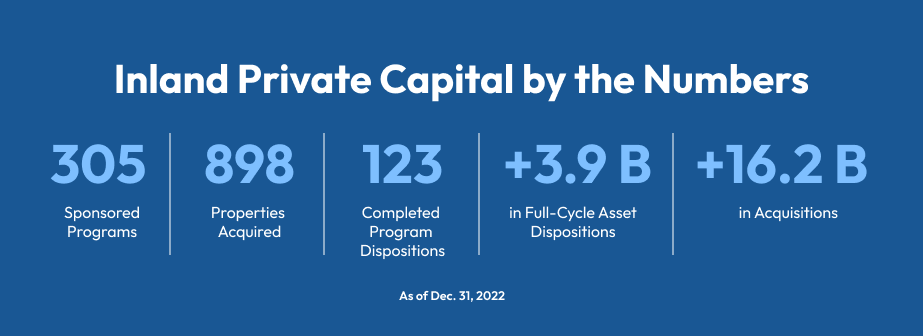
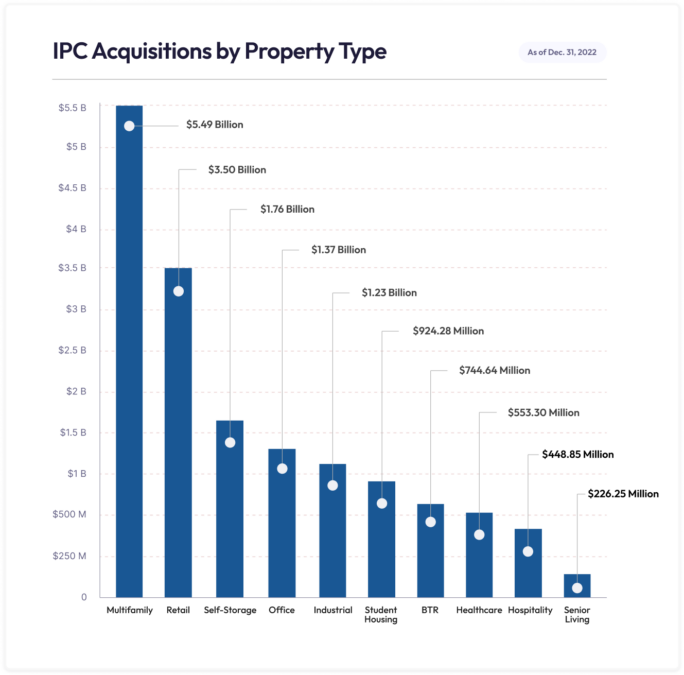
It began as an idea shared among four Chicago school teachers: Daniel L. Goodwin, Robert H. Baum, G. Joseph Cosenza and Robert D. Parks. Fifty-seven years later, The Inland Real Estate Group of Companies, Inc. (Inland) has grown into one of the nation’s largest commercial real estate and finance groups with over $55 billion in acquisitions and more than $80 billion of transactions to date. The various independent entities that comprise Inland touch virtually all areas of commercial real estate, including commercial real estate operations such as acquisitions, development, property management, and specialty financing such as C-PACE lending and bridge lending, as well as being a major sponsor of securitized products, from REITs to DSTs and 1031 exchanges.
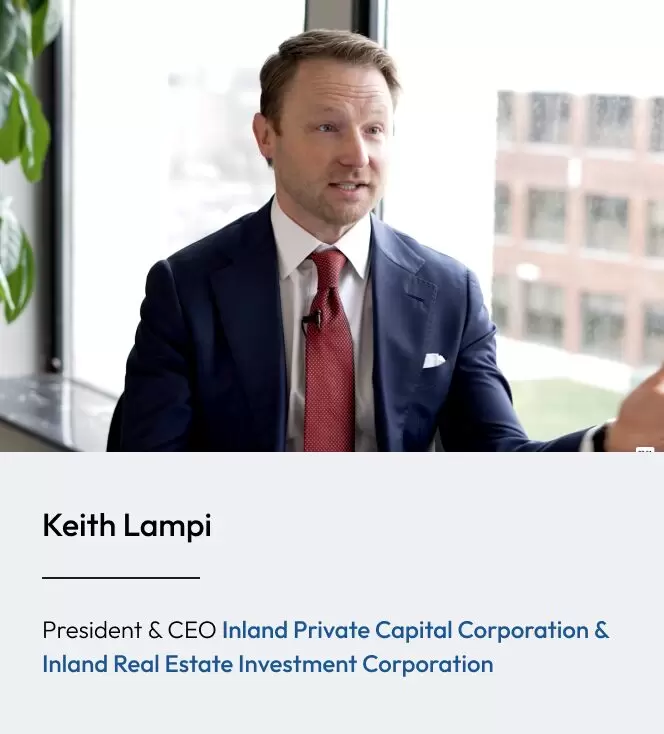
Inland Private Capital Corporation (IPC) is known as “the tax-oriented investment arm of our investment group,” said IPC President and CEO Keith Lampi. “We specialize in 1031 exchanges.”
Section 1031 of the Internal Revenue Code has been on the books for more than a century. “But the nuance associated with packaging real estate investments and allowing multiple owners to come into these products was new in the early 2000s,” Lampi said. “And so Inland Private Capital was kind of a pioneer in a new industry. That’s a big part of what propelled our growth.”
Within that industry, IPC has held a leadership position, due in part to its durability. In the often-cited “irrational exuberance” leading up to the global financial crisis of 2008, “there were something like 75 different investment providers in the 1031 arena,” recalled Lampi. The crisis “washed out a lot of firms that didn’t have that staying power.”
“So fast forward to today,” he continued. “We’re considered not only a pioneer but also a heritage sponsor, a group that has been there since the beginning and is committed to the industry.”
From TIC to DST
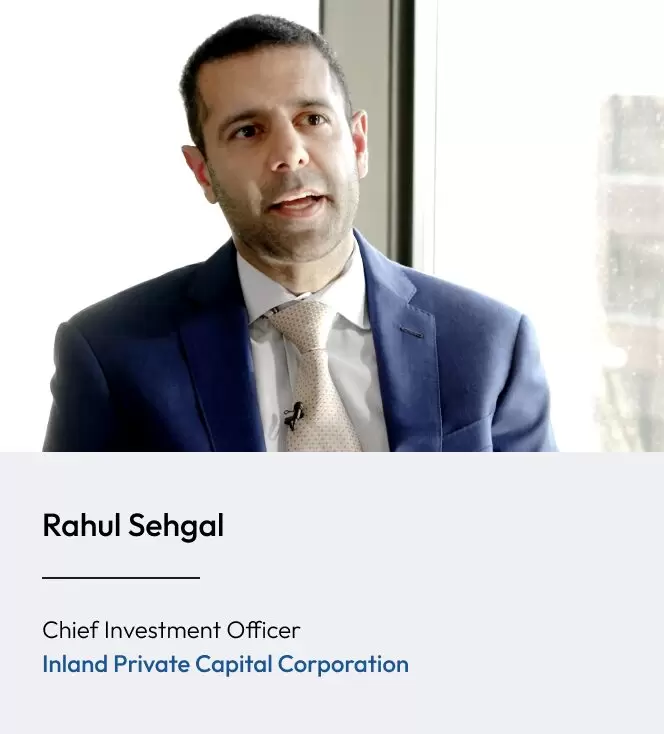
The 1031 industry has changed from IPC’s early days, Chief Investment Officer Rahul Sehgal told Connect CRE. “When I started with Inland Private Capital, we were primarily using the tenant-in-common structure as the preferred vehicle for investors seeking to complete 1031 exchanges and defer their taxes,” he said. Following the 2008 financial crisis, the Delaware Statutory Trust became the vehicle of choice.
The reason is that under the DST structure, “the trustee is Inland Private Capital Corporation, which allows the investors to come in more easily because they don’t have the same obligations under the loan documents [as they would under a TIC] because Inland, as the trustee of the trust, is the carve-out guarantor for the loan,” said Sehgal. This format allows investors to come in with as little as $100,000.
Moreover, “in a single Delaware Statutory Trust, we can have several properties, which allows an investor to diversify without having to compromise on which assets would be acquired, because each one of those assets are predefined in the Delaware Statutory Trust,” Sehgal said. “So rather than investors seeking their own assets, what we found is that investors, even with $1 million or $2 million, will diversify across several states and have exposure to not only different parts of the country, but also to different asset classes.”
A more recent introduction to the realm of tax-oriented real estate investment strategies was the Qualified Opportunity Zone (QOZ), enacted as part of the Tax Cuts and Jobs Act of 2017. “We were very quick to mobilize as an early adopter of that segment,” said Lampi.
Like DSTs, QOZs are also tax-driven. However, while DST investors seek a steady income stream, QOZ investors “are looking at it from a 10-year hold perspective,” Sehgal said. “There’s also a tax component, after 2026. And so those investments are more return-driven from an internal rate of return perspective.”
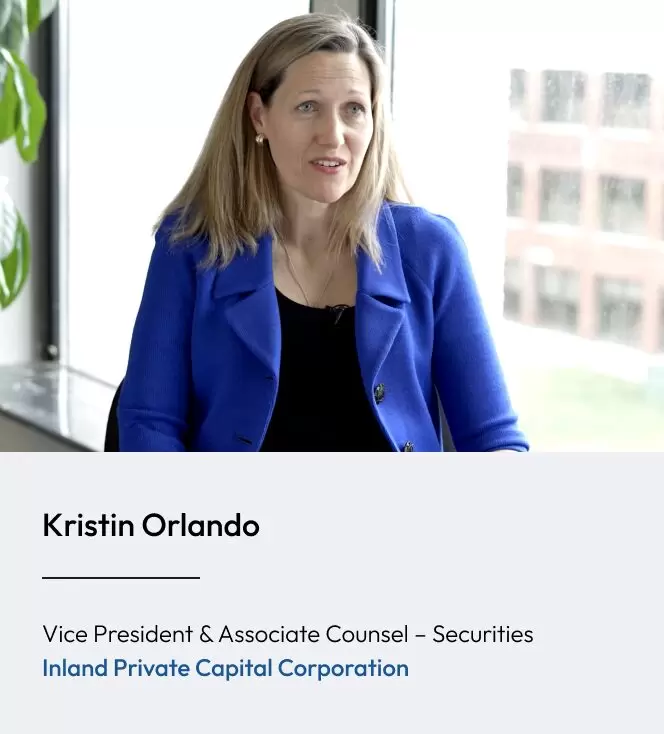
Because QOZ investments fall under the purview of the IRS, “they have to be structured in a compliant way to meet all the applicable regulations,” said Kristin Orlando, VP and associate counsel–securities. “So that’s where legal comes in. We work with the business team to set these programs up, structure them, and try to innovate and come up with a program that gives investors different opportunities.”
Widening Focus
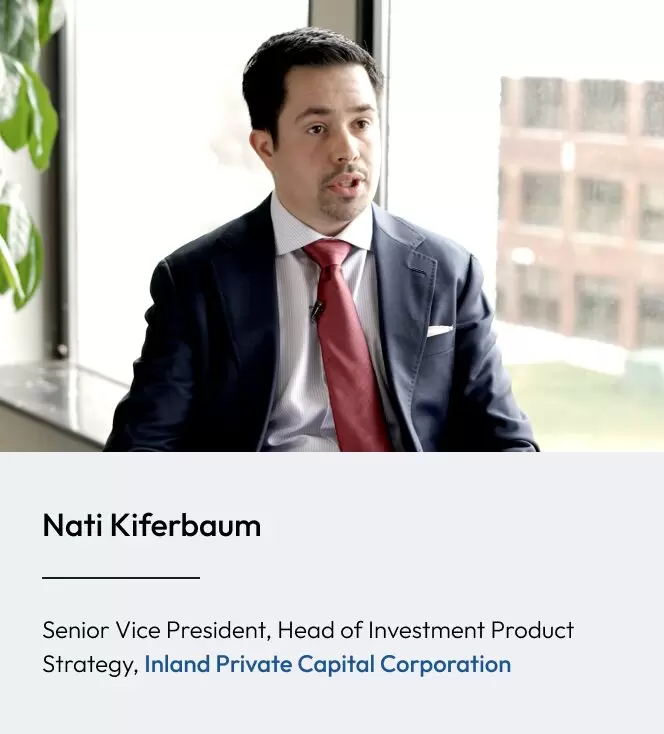
In common with Lampi, Sehgal and Orlando, SVP and head of investment product strategy Nati Kiferbaum has long been a mainstay of the IPC team, joining the company in 2012 as an acquisition analyst. “When I started, we were very much focused on retail and office, multifamily and industrial — the major food groups,” Kiferbaum said. “So from a product development perspective, our acquisitions team was very focused on those sectors.” Their focus would soon widen, though.
Differentiation has long been a key component of IPC’s product development. In the aftermath of the 2008 downturn, “we were really focused on and very intrigued by some of the sectors that performed extremely well coming out of the great financial crisis — niche sectors at the time, sectors like self-storage, student housing and healthcare,” said Kiferbaum. “We pioneered every one of those sectors into our marketplace, providing investors with access to not only the major food groups but also some of those sectors that are a little more defensive or have historically been more defensive.”
Covering a variety of sectors isn’t the only IPC point of differentiation. Although the newly introduced IPC followed a strategy similar to that of its public counterparts, “we’ve always been students of our own markets, certainly students of the broader real estate market,” Lampi said. “As we saw the economy evolve, we saw ourselves managing real estate through different economic cycles. Our investment strategy evolved.”
Key to that evolution was the question “what can we be doing better?” The answer to that question was “we need to diversify more,” said Lampi. “We need to bring greater access to our marketplace because an investment strategy that may be right for one investor may not be right for another.
“Providing optionality and giving investors and their financial advisors a chance to choose their investments and choose their diversified portfolio made a lot of sense,” he added.
As of year-end 2022, IPC had completed 123 program dispositions since inception, producing weighted average total returns of more than 125% for each asset class. Sehgal charted some of the factors contributing to this success, starting with IPC’s acquisition philosophy.
“We’ve always taken a very conservative stance, regardless of which asset class we’re talking about,” he said. “When we’re looking at a deal, we are underwriting with a very measured and conservative stance, despite what market conditions might show.”
That stance entails evaluating a property’s rent growth and its reserves. “This also involves the acquisition strategy with respect to financing,” said Sehgal. “Typically, our programs have very moderate leverage, 40% to 50%. And there are also programs that are offered on an all-cash basis without any financing to mitigate some of that volatility.
“By underwriting conservatively, and also being very prudent in our acquisition and growth strategies, we have been able to deliver these types of results for our investors,” he continued.
It All Starts with Research
Branching out into new property types is a similarly methodical process. “With each asset class, it’s a slightly different story, but it all starts with research, and it also starts with cultivating relationships with groups that have the same mindset that we do from a long-term investor perspective in terms of driving performance,” said Sehgal.
Conservative though IPC may be in its approach, the team is constantly thinking ahead. “As we sit here today, we’re undergoing the largest transfer of wealth in U.S. history,” said Kiferbaum. “Half of the wealth in this country is cemented by the baby boomers: about $78 trillion, most of which is in real estate.”
This “silver tsunami” has given rise to changing priorities when it comes to passive ownership of real estate. Although 1031 exchanges have been a mainstay since IPC was launched, “we’ve seen an evolution to a new product strategy — the 721 strategy,” Kiferbaum said.
As a tax deferral strategy, Section 721 and Section 1031 have been around a long time. However, Kiferbaum said, 721 provides an additional benefit that 1031 does not provide, namely self-directed liquidity.
The IPC team considers longer-term demographic trends in addition to the here and now. “When we look at the aging population, the silver tsunami, we also look at the 25% of the population that’s approaching college age,” said Sehgal.
Senior housing and student housing “have done very well when you look at historic performance,” he continued. “But they also have resilient characteristics when not only looking at inflation but also tied to life events, for example, senior housing. It’s not necessarily a choice, but sometimes a need. Our population is aging and there’s a need for care. Same with student housing. We focus on top-tier universities with diverse demand drivers. And what we’ve seen is not only enrollment growth, but we’ve seen substantial year-over-year rent growth in those universities as well.”
Inflation, Interest Rates, Growth
As an investment manager, IPC considers the broader economy and the state of the financial markets along with real estate. In some respects, not much has changed with the U.S. economic outlook besides the year. Inflation has declined, which should give the Federal Reserve far more flexibility going forward to ease monetary policy. But growth seems vulnerable to a downside surprise far more than in a typical year, and at the same time, the economy continues to defy expectations to produce above-trend growth.
Inflation, interest rates and economic growth will remain top of mind for investors in 2024. “We saw rapid increases in interest rates [in 2023], which of course, affect all markets. I don’t think people realize how significant an increase we experienced as an industry over the course of an 18-month period,” Lampi told Connect Money. But “we know a lot more now.”

The high interest rate environment impacted IPC’s deal volume. “In 2022, we did about $2.7 billion in purchases in a variety of products. When the government decided to almost shut down the economy [from aggressive interest rate hikes], we only bought about $1 billion,” explained Cosenza, Vice Chairman, The Inland Real Estate Group and President of Inland Real Estate Acquisitions, LLC. “Many sellers were still thinking about those great prices back in 2021 and 2022.”
However, both Cosenza and Lampi anticipate more opportunities than challenges as the year unfolds. “As we navigate the market, we have a lot more perspective that makes us feel comfortable that this is the environment we will be operating in,” noted Lampi. “But it allows you to use better judgment to assess what your cost of capital will be in a new acquisition, assess what may be a potential buyer’s cost of capital will be on a disposition. Those are positives for the industry.”
“The opportunities come in when a seller mis-guessed what he or she was going to do in the future,” added Cosenza.
U.S. inflation has experienced a sharp drop from its peak in 2022. And just as importantly, a decline in inflation expectations over the next three and five years has prompted a dovish pivot by the Federal Reserve, which should help to further push interest rates lower and stabilize the capital markets.
A Turning Point
Sehgal believes we’re at a turning point in the commercial real estate market and, more broadly, the real asset cycle. “We are seeing that trend [of higher interest rates] reverse as well as we’re seeing lenders increase their appetite for commercial real estate.”
The challenge in 2023 was due to several factors, not just higher interest rates. It was “also exposure to certain asset classes such as office. And what we’’re seeing is, as those balance sheet issues get resolved from the lenders’ perspective, their appetite and their willingness to lend have dramatically increased. I do expect that trend to continue in 2024,” explained Sehgal.
Sehgal is also positive on capital raising efforts within commercial real estate. “Specifically for the 1031 industry, we anticipate that capital raising is going to increase substantially in 2024. As you see the capital markets stabilize, what we’re seeing is an increase in transaction volume.” He anticipates the velocity will also increase.
Lampi, meanwhile, highlighted several real estate sectors that have benefited from higher inflation such as brick and mortar properties including self-storage. “We saw some of the highest year-over-year rental increases we’ve ever seen since the firm entered the storage market.” Lampi also highlighted multifamily properties as a beneficiary, and student housing is now beginning to reap rewards from being able to raise rents.
The commercial real estate industry confronted numerous obstacles in 2023 and has largely begun 2024 with the same hurdles. Along with facing elevated interest rates and “sticky” inflation, market participants have had to navigate around the possibility of a recession, evolving working habits and geopolitical considerations.
IPC’s hedging strategy against these issues lies in diversification. “Part of Inland’s broader plan since the beginning was to not be a specialty organization. We were a real estate investment organization,” explained Lampi. “We have assets under management in a variety of different segments of the market.”
Pivoting to Residential
Amid the uncertainty in the retail and office sectors, Inland has turned to residential properties. “There’s still a huge housing shortage in our country. From an investment perspective, the residential sector makes a ton of sense. Self-storage [along with student housing and senior living] is an example.” Lampi emphasized the low correlation between those assets and macro-economic conditions as one of Inland’s reasons for investing in them. At the same time, real estate transactions in 2023 were down significantly. Private real estate valuations have been impacted by rising cap rates, slower growth, and higher borrowing costs. These concerns have caused banks and other lenders to withdraw from the market, leaving asset owners with a financing vacuum with loans coming due at higher rates and higher loan-to-values.
Lampi believes this “probably” sets the stage for opportunities to provide capital. “Despite rising borrowing costs and some of the challenges that presents, with apartments, storage, senior and student housing, the NOI growth was so significant because of rent increases that it’s kept up in that regard.
“Cap rates have widened. The cost of capital has increased. But it depends on what an investor is looking to do and we expect that there will likely be some opportunistic buys out there, maybe within the hotel sector, or office or retail sectors.”
Lampi sees “green shoots” on the horizon for real estate transaction volumes. “We’re starting to see that liquidity return to the market in some of the sectors that have strong fundamentals.”
Price Capitulation
Kiferbaum added that sellers have begun to “capitulate” on pricing and that the firm is “really focused on deploying capital, as aggressively as we can in instances where we’re seeing pricing dynamics being driven by sellers that are a little bit more distressed.” Kiferbaum likes self-storage, student housing and healthcare as these sectors “will be able to weather this current storm.”
From a risk management perspective, it’s all about the acquisition and underwriting philosophy. “The company has always had a stance that we’ve had very moderate loan to values,” said Sehgal. “Those loan to values provide more flexibility in attempting to mitigate any potential downturns in the market. But above and beyond that, what we have done is built our reserves when we’re looking at holding an asset for, say, 7 to 10 years.”
“We build our reserves upfront on day one, as opposed to taking them through potential cash flow throughout the holding period. That helps you mitigate the risk in case there was an unforeseen capital expenditure, or in case you did not experience the growth in income that you expected,” added Sehgal. “The combination has really helped us weather multiple storms in the past, and that conservative philosophy continues to this day.”