



National CRE News In Your Inbox.
Sign up for Connect emails to stay informed with CRE stories that are 150 words or less.

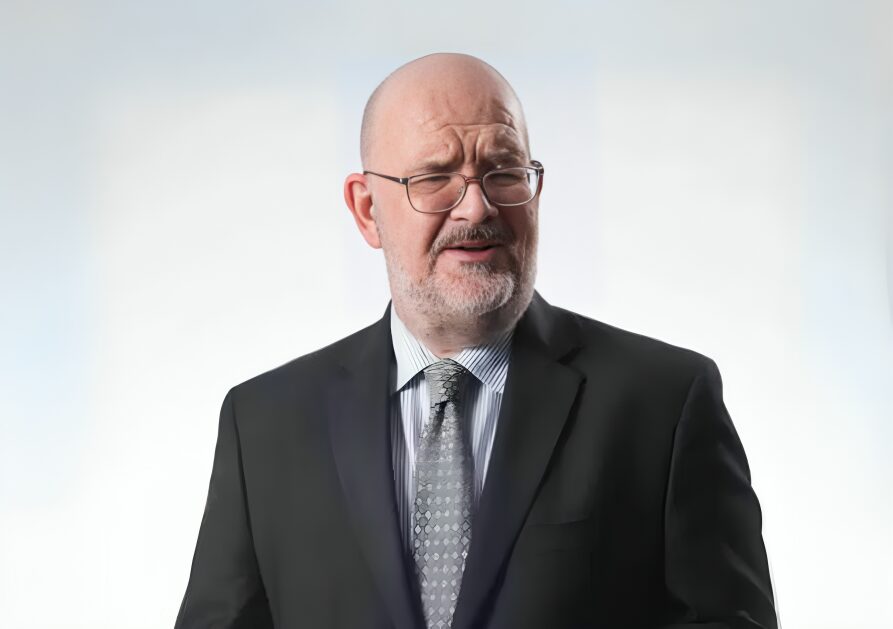
Walker Webcast: Brookfield Real Estate’s Lowell Baron on Investing from Conviction
One of the undisputed 800-pound gorillas of commercial real estate and the broader real assets universe, Brookfield has been so large and so multi-faceted for so long that it’s easy to miss the fact that it didn’t start out on that scale. “People laugh when I say this: I came to Brookfield because I wanted to go to a small place,” Lowell Baron, CEO of Brookfield’s Real Estate Group, told Walker & Dunlop CEO Willy Walker on this week’s Walker Webcast. “I wanted a place where I was working with a group of people that I sat around with and knew and we were building a business together.”
Now a global organization with $300 billion in assets under management, Brookfield had a single credit fund and a 50% interest in an office REIT when Baron joined the firm in 2005. Although its scope has grown exponentially, the Brookfield real estate business had two “kernels” which serve as its foundation today, Baron said.
“We were an investor first,” he said. “So as opposed to many of our peers who grew up as investment managers that may have scrambled to put a little bit of money together, but really they were investing money of their clients—other people’s money—we were investing our own money first.”
That principle hasn’t changed. “Even as we’ve grown and now bring investor capital alongside us, we’re generally the biggest investor in pretty much everything we do because we want to put our capital to work and we only invest in the things we have conviction in, because it’s our capital,” said Baron.
The other tenet of Brookfield’s platform, Walker pointed out, is that the company differentiates itself not so much through its hard assets but through its operating businesses. That too was a foundational element from the days when the only property sector Brookfield owned was office.
“What it taught us very clearly was that the place we had confidence and comfort in investing was in office because of the operating capabilities of that business,” Baron recalled. That entailed “the ability to manage, to lease, to invest capital, to property manage, asset manage—all of it, every piece of the operating business in office.”
In 2026, Brookfield has 30,000 employees worldwide who focus on operations. “They’re experts in their sectors, they are managing the assets that we own, and they’re providing incredible intelligence and confidence,” said Baron. “Unless you have a starting large balance sheet of assets, you can’t afford to create all these operating platforms. We have that capability and we don’t really see anyone else being able to replicate it.”
The company has been active as both buyer and seller even as others have preferred to wait for better times. “This started two years ago already, but we’re in a really good buyer’s market, not necessarily in a good seller’s market,” Baron said.
From a buying perspective, “we think we’re in the early, early days of recovery,” he continued. “We are two years into that recovery, and there’s a lot of headlines and volatility that are masking it. So people aren’t really paying attention to what’s happening on the ground.”
As a seller, Brookfield focuses on weighing the current sale price against the likely forward return of holding the asset longer. “The one thing we don’t put into that analysis is an assumption that cap rates are going to come back or improve,” said Baron. “If you’re going to push off selling because you assume ‘oh, cap rates will get better,’ we think that’s a very bad strategy. If there’s a lot of growth in a business plan and you can grow your NOI, then there may be a reason to delay sales.”
The discussion also focused on Brookfield’s role as a source of debt and equity, the opportunities presented across a variety of property sectors and the future of the industry, i.e., the people that come to work in it. “What I tell people is, you need to be a student of the industry,” Baron said. “If you really want to be in real estate, you’d better love it and you’d better know what’s going on.”
On-demand replays of the Nov. 18 Walker Webcast are available through the Walker Webcast channels on YouTube, Spotify and Apple. Subscribe to get invites and replays for new Walker Webcast episodes every week.
- ◦Sale/Acquisition
- ◦Financing
