


California CRE News In Your Inbox.
Sign up for Connect emails to stay informed with CRE stories that are 150 words or less.
The Ride, Like Most Business, Was About Navigating the Journey
By Mark Strauss
Editor’s note: This past April, managing director, capital markets Mark Strauss of Walker & Dunlop set out on a triple mission: to raise $1 million for No Kid Hungry, to raise awareness of childhood hunger, and to complete a coast-to-coast bicycle ride. Here, he recounts his experiences along his journey from Corona del Mar to Rehoboth Beach, DE.
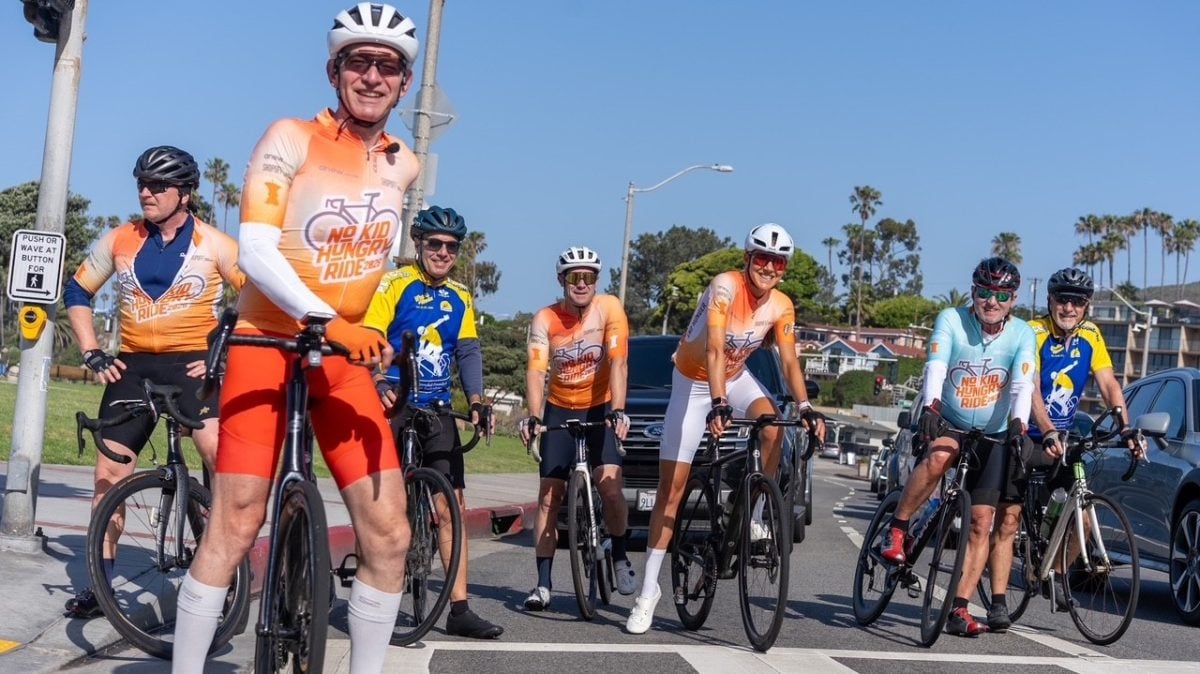
On April 17, my 73rd birthday, I clipped into my pedals at Lookout Point in Corona del Mar with the Pacific Ocean behind me and Rehoboth Beach, DE, more than 3,000 miles ahead. The objective sounded simple enough: ride across America and raise $1 million for No Kid Hungry.
Of course, most goals sound simpler when reduced to one sentence.
I had trained for months. We had mapped the route, identified hotels, planned rest days, assembled equipment and created contingencies. Karen, my wife, and Scott, our driver, my body and part-time bike mechanic, followed in a 31-foot Thor Outlaw RV that would become mobile office, locker room, kitchen, bike shop, media center and mission control.
I thought we had a plan.
We did. What I had not fully appreciated was how often the plan would have to change.
Over the next sixty-nine days, I rode roughly 3,200 miles through thirteen states. There were mountains, deserts, headwinds, hail, road closures, mechanical problems, wrong turns, a back problem and more peanut butter than I care to remember. There were also extraordinary people, remarkable landscapes, an education in how the country actually works and a lot of time to think.
When I came home, I began writing down observations from the road. Many had nothing to do with cycling. They felt familiar because I had encountered versions of them for decades in business: make a plan, know when the facts have changed, use the resources that fit the situation, keep moving when progress is slow, and never underestimate the people around you.
Navigating the Journey
For the first several weeks, I still thought of the route as something we had planned. By Oklahoma, I understood it was really something we were managing.
We entered the state expecting heat and wind. We got both, plus hail. One morning the wind was strong enough to make riding unsafe. Instead of spending the day proving that I could fight Mother Nature, we drove to Oklahoma City, where the Peloton bikes at the Skirvin Hotel became temporary substitutes for the open road. I logged more than 100 indoor miles while the wind rattled the city outside. A few days later, with more rain in the forecast, we bought a Wahoo trainer in Tulsa and turned a hotel room into another makeshift training center.
None of that looked like the plan we had drawn months earlier. But the objective had not changed. We were still moving east and still trying to complete the mileage safely.
That distinction stayed with me. In business we spend enormous effort on plans, budgets, underwriting and strategy, as we should. But a plan is based on what we know at a particular moment. Once the facts change, defending the original assumption can become more expensive than changing it.
I saw the same thing later in Pennsylvania when a back spasm made the smartest decision not to ride for a day. After fifty-eight days of trying to move forward every morning, progress briefly meant stopping.
The destination rarely changed. The route often did. That is probably as good a description of navigating a long ride—or a long business cycle—as any I came home with.
The Right Tool for the Day
The ride also forced a small decision almost every morning: which bicycle should I use?
My Cervélo Caledonia-5 was the Thoroughbred. It was lighter, faster and the bike I preferred when the pavement was good and the route was predictable. The Trek Checkpoint was the Clydesdale—heavier, less elegant and not as fast, but stable, dependable and much better suited to gravel, debris, rough shoulders and uncertain conditions.
On one stretch of Interstate 10, I chose the Trek because I expected debris along the shoulder. Several pieces of wire embedded themselves in the tires, but the tubeless sealant did its job and I kept riding. In Arizona, as the route climbed toward Prescott, Williams and Flagstaff and the shoulders became rougher and the wind less predictable, the Clydesdale increasingly got the call.
I liked the Cervélo more. That was not the same as saying it was the right bicycle for every day.
The business analogy occurred to me gradually. We all have approaches, people and tools we trust because they have worked before. Familiarity is useful, but it can also become a bias. Some situations reward speed. Others reward stability. Some require more capital, more expertise or more patience. Some need a sophisticated solution; others need the simplest one that works.
The question was never which bicycle was better. It was which bicycle was better for the conditions in front of me. Not every problem is a nail, and carrying a hammer does not make it one.
Five Miles at a Time
Before the ride, 3,200 miles sounded enormous. Once I was riding, 3,200 miles was almost meaningless.
What mattered was the next sixty. On difficult days, even sixty was too large a number, so I reduced the road again. Five miles. Ride five. Reset. Ride another five. At my pace, five miles might be fifteen or twenty minutes. Success began arriving several times an hour.
Day 55 made the method particularly useful. Eastern Ohio and West Virginia produced about 65 miles and roughly 5,600 feet of climbing, with grades repeatedly reaching 10, 11, 12 and 13 percent. By then I had almost eight weeks of riding in my legs. Everything hurt.
Thinking about sixty-five miles did not help. Thinking about the next five did.
I recognized something familiar from sales and fundraising. Annual production goals are necessary, but nobody makes an annual sales goal today. Today you make a call, schedule a meeting, send a proposal, follow up with a prospect or move one transaction another step. Large outcomes are usually built from a consistent collection of much smaller actions that are not especially dramatic by themselves.
Eventually enough five-mile segments put the Atlantic Ocean in front of me.
Purpose Changes the Conversation
The bicycle was simply the vehicle for a larger mission.
I was riding to raise $1 million for No Kid Hungry and to help more people understand that childhood hunger remains a serious problem in a country with extraordinary resources. On difficult days, I would remind myself that I had chosen the discomfort. The children I was riding for had not chosen hunger.
But purpose did something else that surprised me. It changed the conversations along the route.
A wrestling coach in Missouri approached us because he saw No Kid Hungry on the RV and wanted to tell us about taking his teams into the community to deliver food. A bike-shop owner in Bourbon repaired a troubled tire and refused to charge us. Restaurant owners fed us. Hotel employees helped solve logistics. Construction crews stopped equipment and escorted us through closed roads. Some people donated. Others shared the story or simply wished us well.
They were very different people in very different parts of the country. The reaction was remarkably consistent once they understood why we were there.
I have spent much of my career asking people to invest, lend, transact or make decisions. The ride was a useful reminder that an ask lands differently when the purpose is understood first. People do not only respond to what you want them to do. They respond to why it matters.
The People Who Took Ownership
One of the hardest riding days of the trip ended in Wheeling, West Virginia. I had just completed the Appalachian day with roughly 5,600 feet of climbing. My legs hurt. My feet hurt. My back hurt. Even my backside hurt.
After a television interview and dinner, we arrived at the hotel and discovered that our reservation had accidentally been made for the previous night. The hotel was sold out.
At that point, I had very little interest in organizational theory. I wanted a shower and a bed.
A front-desk employee could easily have explained the problem, apologized and sent us elsewhere. Instead, she kept working it until she found two rooms. The problem became hers even though she had not created it.
That same quality appeared repeatedly. Construction crews could have pointed us toward long detours; instead, on two occasions they stopped work and escorted us through. A hotel manager found a place for a 31-foot RV where none seemed to exist. Bike mechanics stayed late. School nutrition directors spoke about feeding children less as a program than as a responsibility.
By the end of the ride I had become more interested in how people approached their work than in what their titles were. Some people completed the task in front of them. Others took responsibility for the outcome.
Every company would like more of the second group. I am not sure culture can manufacture that instinct, but leaders can certainly notice it, reward it.
No One Rides Alone
A photograph of a cyclist on an empty road can make a cross-country ride look like an individual accomplishment. Mine was anything but.
Karen and Scott navigated, drove, found food, solved hotel problems, charged devices, coordinated media, helped with fundraising, handled laundry, watched weather, located bike shops and dealt with hundreds of details I often never knew existed. Karen could enter a hotel lobby, laundromat or diner knowing no one and emerge with three new friends and a local recommendation. Scott became driver, navigator, mechanic, logistics coordinator and, occasionally, therapist.
Friends and family rotated in and out. Bill Shopoff rode multiple sections. My sisters Andrea and Lynn and their husbands Brad and Mark became the temporary support crew in Illinois. Jim Schroeder flew in to ride Ohio. My son Josh and friends joined near Washington.
Commercial real estate often celebrates the person who originated a transaction or the company whose name is on the building. The road kept reminding me how incomplete that picture is. The visible accomplishment rests on the work of people who may never appear in the photograph.
The miles mattered some. The mission mattered most. The people made the journey possible.
Seeing the Economy at Bicycle Speed
Crossing the country averaging 14 miles an hour gave me a different view of the economy.
Outside Winslow, AZ, Interstate 40 ran on one side of me with an almost endless procession of tractor-trailers. On the other side, BNSF freight trains pulled double-stacked intermodal containers across the desert. In Missouri there were semis, dump trucks, flatbeds, farm trucks and fuel trucks. Along the Mississippi, levees, bridges, rail lines, industrial sites and barge traffic told the same story in another form.
At first the trucks were mostly obstacles to be respected. After enough days beside them, I started seeing something else: the constant movement required to make ordinary life run smoothly.
Grocery shelves get stocked. Restaurants receive food. Gas stations have fuel. Hotels have clean sheets. Bike shops have replacement tubes. Packages arrive on doorsteps. None of it happens by accident.
For someone who has spent much of his professional life in real estate and capital markets, the connective tissue became visual and tangible. We analyze buildings, land, rents, cap rates, debt, equity and value. From the bicycle I kept seeing the network around those assets—roads, rail, power, distribution, agriculture, labor, small businesses and towns.
Buildings became less of an isolated asset but a small part of a much larger tapestry. The lifeblood of the nation- trucks and trailers, surged through the threads of roads, rails and rivers.
Abundance, Scarcity and the Mission
Then there were the fields.
Corn. Wheat. Soybeans. Barley. Orchards. Cattle. Mile after mile of productive land from the West through the Midwest and onto Maryland’s Eastern Shore. Crossing the Mississippi into Illinois, and later riding across Indiana, there were stretches where agricultural abundance filled nearly every direction I could see.
From a bicycle, you do not pass that abundance in a few minutes. You ride beside it for hours.
That made the contradiction at the center of the ride harder to ignore. America has an extraordinary capacity to produce food, yet millions of children still live in households where reliable access to enough nutritious food is not assured.
In Ohio we met with the Children’s Hunger Alliance. In Pittsburgh we toured the Greater Pittsburgh Community Food Bank. Near the end of the ride in Maryland, we met No Kid Hungry’s Kara Panowitz and Beth Brewster, Director of Food and Nutrition for Caroline County Public Schools. Walking through a restored school building being used as a culinary education center, I could see one small part of the chain from donation to program to meal.
Riding 3,200 miles attracts attention. Feeding children every day usually does not. The bicycle could help raise money and tell the story, but the real work belongs to people doing it every day.
A Wider Frame of Reference
One of the great gifts of traveling by bicycle is that the country changes slowly enough for you to notice.
Desert becomes pine forest. Ranchland becomes farmland. Wheat becomes corn. The architecture changes. The towns change. Accents change. The way people use the land changes. You begin to see how easy it is to mistake your own surroundings for the whole picture.
I came home having seen far more of America than before and, somewhat paradoxically, more aware of how much I had not seen.
That matters in business too, although I am wary of turning every observation into a lesson. People and markets make more sense when viewed in the context of their daily reality. A conference-room assumption can look very different after a site visit, a conversation with the person operating the property, or simply spending enough time in a place to understand what drives it.
The bicycle did not make me an expert on the country. It made me more conscious of how incomplete any single frame of reference can be.
The Finish Line Is Not the Finish
The final morning began in Harrington, DE, 48 miles from the Atlantic Ocean. With ten miles remaining, I found myself doing something I had not done during the previous two months: slowing down because I did not want to arrive too quickly.
For sixty-nine days, forward motion had been the basic objective. Make the next town. Beat the storm. Find the safe road. Get through the climb. Reach the hotel. Suddenly the Atlantic was close enough to measure in minutes.
Then the ocean came into view. Family, friends and supporters were waiting. Champagne corks flew. Fortunately, I still had my cycling glasses on.
The ride had covered roughly 3,200 miles. It had raised meaningful support and awareness for No Kid Hungry. But the moment at the Atlantic did not feel quite like an ending.
The bicycle had reached its destination. The mission had not.
Business has plenty of similar moments. A closing is the end of one process and the beginning of another. Winning a client creates an obligation to serve one. Completing a development begins the work of operating it. Reaching a production goal eventually resets the clock.
I left California thinking largely about the destination. I came home thinking more about the navigation: the plans that changed, the tools that fit one day but not the next, the five-mile increments, the people who stepped forward, and the purpose that made the effort worth sustaining.
The ride, like most business, was about navigating the journey.
And somewhere down the road is the next life-expanding experience.
About the mission: The No Kid Hungry Ride was created by Mark Strauss, Managing Director at Walker & Dunlop , one of the leading Real Estate Finance and Services Company in the US. The mission is to raise funds and awareness for No Kid Hungry in their effort to end childhood hunger in America. Learn more or contribute at www.nokidhungryride.com.
- ◦People

