



California CRE News In Your Inbox.
Sign up for Connect emails to stay informed with CRE stories that are 150 words or less.
HITT Contracting Stays a Step Ahead
A nationwide contractor with 16 offices across the U.S., HITT Contracting has been performing work in California for more than 20 years and has offices in Los Angeles, Santa Clara, and San Francisco. The nature of its projects and the demands of building them have certainly evolved over time, but the company considers its involvement from the early stages of design to be a competitive advantage. Connect CRE spoke with Trevor Coffey, Executive Vice President for the West Coast and Southwest regions, about the ways in which the company maintains its edge in the California marketplace.
We’ve seen California grow more prominent in the aerospace, hard-tech and advanced manufacturing ecosystem. What are the drivers of this growth for California, especially Southern California, and what are the implications for the manufacturers’ real estate and facility requirements?
Existing talent and a strong military presence are a big part of it, and on top of that, there’s the increased capital investment. Defense tech, aerospace and hard tech have gained a lot of attention just in the past year and a half. At midyear 2026, funding had already surpassed the more than $9 billion raised in 2025.
In Southern California specifically, there’s traditionally been a strong culture of startups and these types of companies planting a flag here. The South Bay of Los Angeles, including Hawthorne, El Segundo, Torrance, and Long Beach, has been a central hub, and cities like El Segundo add real value with a business-friendly tax environment and streamlined permitting. One great example is Anduril’s upcoming large development in Long Beach, in addition to their Costa Mesa campus in Orange County. Much of the growth in the South Bay, though, has been driven by the ecosystems surrounding companies like SpaceX, Northrop Grumman, NASA’s Jet Propulsion Lab and others. Those established companies continue to launch new businesses and locations to stay close to those talent and technology hubs, including proximity to Space Systems Command at the Los Angeles Air Force Base. Federal demand also is a factor, driven by the Golden Dome initiative and increased Space Force activity. At the same time, some companies have moved high-volume manufacturing or assembly out of state, while California continues to be strong in engineering aspects, including specialized fabrication, R&D, and satellite integration.
With all these companies being launched or spun off, is there a risk of a space crunch?
Two of the biggest ports in the country are here in Los Angeles and Long Beach, so there has always been a community and market around large buildings, tilt-up structures, and facilities that host logistics operations. As a result, there’s a relatively large supply of these types of industrial facilities. But there’s always going to be a limit to how much you can customize an existing building to meet the needs of these companies. Speed to market is also really critical, because these programs are getting created, contracts are being awarded, and companies need to move quickly. New builds aren’t always evolving as quickly as the market needs, so many companies are having to work within the facilities that already exist. That makes being strategic and focused about the site selection process even more important.
Whether it’s advanced manufacturing facilities or data centers, facility spaces are becoming increasingly complex. What do property owners require in a construction partner when designing and building these facilities, and how does a company such as HITT differentiate itself in this area?
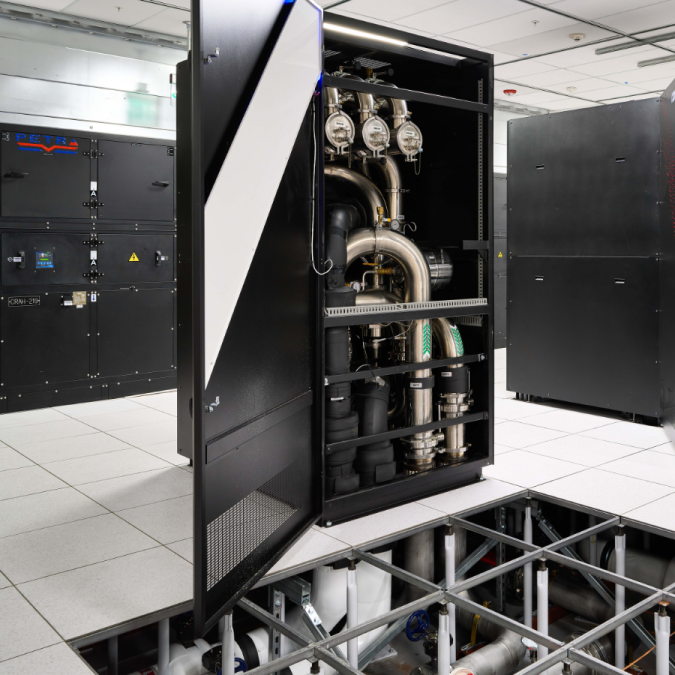
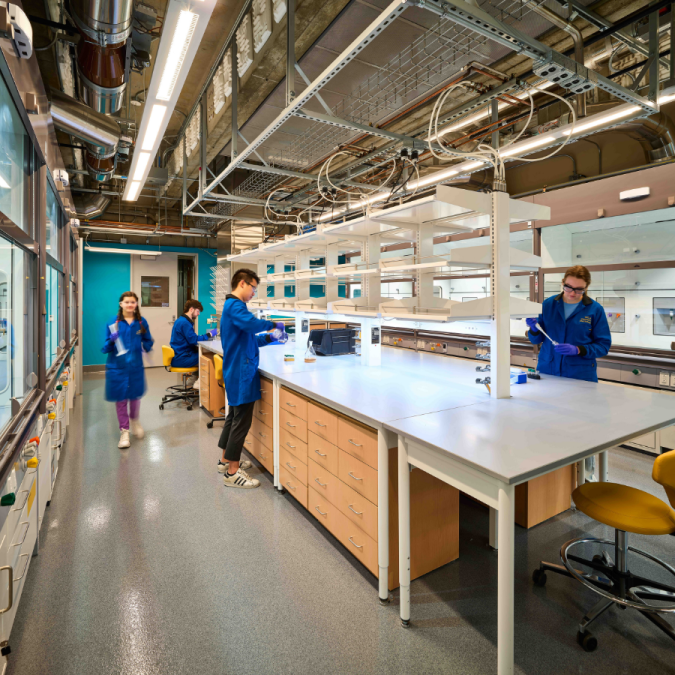
With the growing demand around data centers and these mission critical facilities, there’s a level of familiarity in the market and an established supply chain. Advanced manufacturing is different. Every project can have a different product, process, equipment package, and supply chain, and we’re also seeing a growing push to fabricate and manufacture more of these components domestically rather than relying on international sources. That puts emphasis on technical competency, which is a key part of HITT’s brand promise and our commitment to our clients as a builder. The value of an experienced construction partner is that there shouldn’t be a significant learning curve around how these facilities come together. You want a team that understands the requirements, identify which questions to ask early, and can anticipate issues before they affect schedule or cost. That’s one of the ways we try to differentiate ourselves. As a national general contractor, we can also bring clients a broader network of prequalified trade partners, suppliers, and other vendors, which becomes particularly valuable when the supply chain is specialized, evolving, or constrained.
These facilities also come with a different physical footprint than a typical logistics building. Power and the office-to-warehouse ratio tend to be the biggest drivers, since advanced manufacturing operations are more engineer-dense and carry specialized equipment of their own, such as environmental chambers or large additive manufacturing machines. On top of that, secure perimeters and separated parking are becoming a larger consideration, as classified work adds additional requirements, such as sharing space with neighboring tenants. We’re also leaning into off-site manufacturing and virtual construction to help offset some of the complexity of these projects.
Safety is another area where that expertise really matters. On advanced manufacturing projects, there can be exposure to certain chemicals, gases or rare earth materials, or other specialized processes. Managing those risks can’t just be an administrative exercise or something that sits with the safety department. It has to be understood and reinforced by the full project team every day.
On the owner side, there are multiple layers of stakeholders, all looking at the project differently. There are people making the decisions around finance and leasing, teams responsible for development and delivery, and ultimately, the people who will operate and maintain the facility. A successful project has to work for all of them. That means the construction partner needs to be able to move up and down those layers, understand what each stakeholder needs to accomplish, and help connect those priorities. That ability to act as the glue across the team is critical, particularly on complex facilities where the building, equipment, process, and business strategy all have to work together.
Delays on a project can occur for a number of reasons–but what are the cost impacts of delayed decision-making, and how can this be minimized?
Decision-making is something we prioritize, because on complex projects, a small delay in a critical decision can have a ripple effect on cost and schedule. The challenge is that those impacts aren’t always visible right away. There are a lot of things happening at the same time, so it can be easy for a decision to become delayed without realizing what it’ll hold up downstream. One thing that we emphasize with our clients or stakeholders is early engagement with the project team. We want to be involved as early in a project’s lifecycle as we can so we can identify the decisions that will matter most and when they need to happen. We’ve also seen an increase in design-build deliverables, particularly with our partners like NVIDIA, which helps compress that timeline even further by bringing design and construction decisions together earlier.
Our project teams establish delegated authority thresholds, so routine decisions can be made at the appropriate level. We also treat decision-making as a project metric. It should be a measured and owned item on the critical path that’s visible and being communicated regularly. We’ve done this through client input tracking and trend logs, making those decisions and key commitments visible to everyone involved.
Funding cycles matter here too: we track those closely because the pace of funding and decision-making can have a direct impact on a project’s momentum. Procurement-led scheduling and transparency are part of our process to help minimize project impacts, and they help drive clarity and offer creative solutions while decisions are still being finalized. Leaning into prefabrication and repeatable design also takes some of that risk off the table by reducing how many decisions need to happen in the field in real time.
Power, infrastructure and site readiness are becoming increasingly important in determining whether a property can support its intended use. Does this put more emphasis on site selection, on facility design or both?
They go hand in hand. Technology is evolving, and the way we’re doing things and the equipment we’re using are progressing, sometimes faster than the original design. It can be a challenge to get both sides right. There’s been a pattern to merge site selection and facility design into a simultaneous process rather than treating them as separate steps. More often than not, there’s a more plausible path and probably shorter time frame to expand a building’s footprint than there is to expand or increase the power available to that site through the local utility company. But we’re also seeing a shift in how these facilities are designed, with more interest in alternative energy, microgrids, and on-site generation. We’re actually seeing that play out firsthand on projects like Microsoft’s Alviso data center, where on-site generation is part of the solution to the site’s backup power requirements. It’s a good example of designing around the power constraint rather than waiting on the utility. It’s really a combination of selecting the right site up front and designing the facility with enough flexibility to adapt as the technology and power requirements evolve.
How is HITT investing in developing and retaining field and operations professionals, so that clients have experienced teams and the bench strength needed to keep projects moving? Is training and retention an increasing challenge?
At HITT, we’re always looking for ways to invest in our team members and elevate how we train and develop them throughout their careers. One of our stronger ways of attacking that is through our HITT Futures program, which is our entry-level program. It started in 2005, and we now have more than 300 team members in this year’s program.
A big part of the program is starting in the field out on jobsites. Construction is built in the field, and there’s a level of knowledge you gain by being there that you just can’t get from a drawing or sitting in a classroom or office. Futures participants are paired with a sponsor from our site operations team for at least 12 months, so they have someone experienced helping them navigate that environment and learn from the people around them. I’m a Futures program graduate myself, and I know firsthand how much you learn by being on-site and interacting with the people who are actually building the project.
We also have HITT University, which is our companywide learning platform. We introduced our cohort learning a few years ago to provide peers a platform for interacting and networking with one another to drive knowledge transfer across the organization. as well. It’s valuable to have a mix of team members from different parts of the company learning together, whether they’re in marketing, operations, site operations, or preconstruction team. I think having that peer-to-peer learning also creates internal networking opportunities. These are the future leaders of our company, and it creates connection and reinforces our culture of continuous improvement. Many of our courses are employee-led, which I think is critical too, because you’re learning from people who have firsthand experiences and case studies to share. I also personally spearheaded seminars in Southern California and the Bay Area for our California-based site operations team members each year, which is another opportunity to bring our leaders in the field together and share important knowledge.
There’s certainly a labor shortage throughout the construction industry, and we need to maintain a pulse on that. However, for us, the bigger focus is on continuing to invest in our people and create an environment where they want to build their careers. Strong leadership and strong culture are a big part of that. People want opportunities to learn, they want to work with people they respect, and they want to see a long-term path for themselves.
Ultimately, these are the future leaders of our company. We spend a lot of time thinking about who’s going to carry that culture forward and who the next generation of builders and leaders will be. That investment in our people is what builds the bench strength and talent that our clients rely on.
- ◦Development
