



National CRE News In Your Inbox.
Sign up for Connect emails to stay informed with CRE stories that are 150 words or less.
In Advanced Manufacturing, The Building is Part of the Process
Advanced manufacturing facilities create the technologies that drive modern life, including semiconductors, microchips and pharmaceuticals. They’re more than industrial buildings with leading-edge equipment inside; designing and building them requires deep technical knowledge along with attention to details that vary from industry to industry. Bringing the plans for these facilities to fruition requires close collaboration between the client and construction manager, along with specialized experience. Washington, D.C. area-based HITT Contracting brings four decades of experience to this exacting work. Here, Drew Mucci, Co-President, HITT Contracting, discusses what advanced manufacturing entails today and the challenges in designing, building and operating the facilities that support it.
What is the broader meaning of “advanced manufacturing” in 2026? What industries does it encompass?
Advanced manufacturing is more than an automated version of a traditional factory. It brings together highly engineered production processes, specialized environments, research, and complex infrastructure to produce everything from semiconductors and microelectronics to aerospace and defense systems, automobiles, pharmaceuticals, composites, and other emerging technologies.
In these facilities, the building itself is part of the manufacturing process. You’re not only constructing a building and installing a production line inside it; you’re building around the product and the process used to make it. Power, cooling, controlled environments, specialized utilities, equipment, and material flow all directly affect whether the facility can operate as intended.
That makes early understanding of the production requirements essential. A site may look attractive on paper, but if it cannot support the required power, infrastructure, workforce, or production schedule, it may not be viable. The sooner the team connects those operational requirements to the site, design, budget, and schedule, the greater the likelihood of successful delivery.
Where are we seeing growth in manufacturing today, both in terms of manufacturing sectors and regions of the U.S.? How much of this is due to onshoring or reshoring?
We’re seeing growth across several manufacturing sectors, but activity varies significantly by industry and region.
Semiconductor and electronics investment remains strong across Texas and the Southwest. Next-generation automotive manufacturing continues to expand across the Southeast and Midwest, including our work with Volvo and Scout Motors in South Carolina. Aerospace and defense investment is also growing throughout the Southeast, Southern California, and along the Gulf Coast. Boeing’s continued expansion of 787 production in North Charleston, South Carolina is a good example of the scale of that investment. We also see increased demand for composites manufacturing as aerospace companies move beyond traditional metal components.
Pharmaceutical and life sciences manufacturing is another major area of growth, with announced investments creating significant future demand for specialized facilities, equipment, power, infrastructure, and skilled trades.
Onshoring is an important driver, but not the entire story. Companies are looking for greater control over critical technologies, supply chains, production capacity, and speed to market. National security and supply chain resilience are also influencing investment decisions. Location decisions depend on whether a market can support both construction and long-term operation. Regions may offer incentives or an attractive site, but still need the power, infrastructure, workforce, trade base, and supply chain required to support the client’s production commitments.
The factory of today is often much more elaborate, complex and specialized compared to a few generations ago. What types of facilities are we seeing built today, and what are some of the components they may include?
The facilities being built today range from highly specialized production buildings to large, integrated campuses. Depending on the industry, a single development could include manufacturing space, cleanrooms, laboratories, research and development, regulated warehousing, cold storage, offices, training facilities, tank farms, and the infrastructure needed to support production.
Components vary by sector. Semiconductor facilities often require high-purity utilities, vibration control, chemical distribution systems, and tightly controlled environmental conditions. Pharmaceutical campuses may combine cGMP production, research, cold-chain infrastructure, and regulated warehousing. Aerospace and defense facilities may include large assembly areas, composites production, specialized cranes, testing environments, and maritime infrastructure.
We’re also seeing facilities that combine manufacturing, research, testing, warehousing, and office functions within a single campus. Our work at Supernal’s Waterworks facility in Southern California, for instance, brought together office, warehouse, manufacturing, laboratory, and testing environments to support electric vertical takeoff and landing aircraft research and development.
These projects aren’t only industrial buildings with equipment placed inside them. They’re highly coordinated environments designed around a specific product and process, where utilities, infrastructure, equipment access, sequencing, commissioning, and turnover directly affect when operations can begin.
What are some facets of specialized knowledge that go into the design and construction of advanced manufacturing facilities?
It starts with understanding the client’s production process. The project team needs to know what equipment and systems will be in the facility and how materials, people, utilities, equipment, and information will move through it.
That requires specialized knowledge across cleanrooms and controlled environments, contamination requirements, advanced cooling, process utilities, specialized production equipment, and sector-specific standards. Pharmaceutical facilities add another layer of complexity through cGMP production, cold-chain infrastructure, regulated warehousing, and strict validation requirements.
From a construction perspective, that knowledge must be translated into an executable plan. The team needs to understand how equipment will get into the building, where temporary openings or rigging routes are required, what systems need to be installed first, and how the work can be sequenced without compromising the controlled environment. Digital coordination and virtual construction are also critical because the density and complexity of these systems leave very little room for conflict in the field. The goal is to deliver a facility that is ready to operate, performs as intended, and allows the client to begin production on schedule.
Advanced manufacturing companies often have aggressive production timelines and significant business commitments before a facility is complete. What role does the construction partner play in helping clients successfully bring these facilities online?
Many advanced manufacturing companies have already made commitments to customers, investors, or production partners before the facility is fully designed. Our role is to translate those commitments into an executable plan by working backward from the operational date and aligning design, procurement, construction, commissioning, and turnover around the client’s production goals.
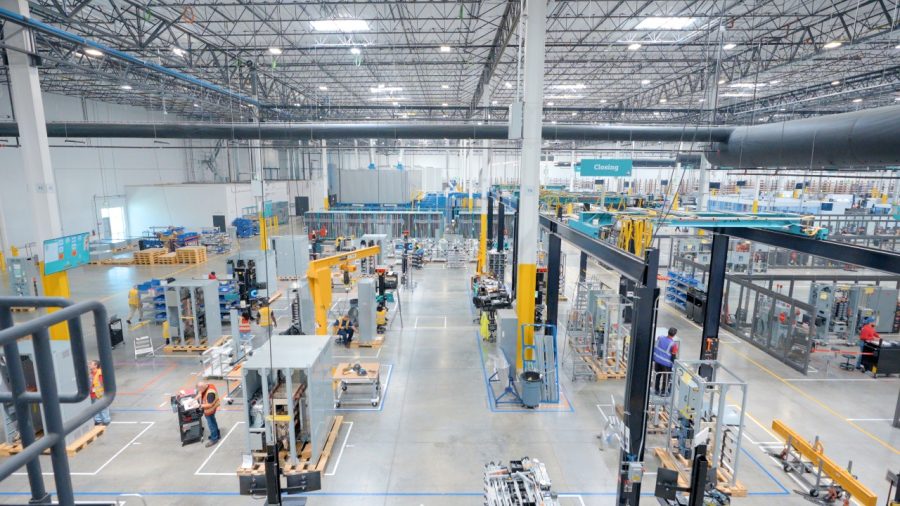
Our work for Siemens in Fort Worth, Texas is a good example. We transformed an existing building into a 400,000-square-foot electrical switchgear manufacturing facility supported by a 10-megawatt service upgrade. Because the schedule was fast-tracked, we sequenced the work to give Siemens early access to key production areas rather than treating final completion as the only milestone.
The client may still be refining its process, equipment needs, or operating model while the facility is taking shape. The construction partner must secure the right trade partners, identify risks early, make decisions quickly, and adjust the sequence without losing control of cost or quality. The goal is to give the client confidence that the facility will be ready to operate when production needs to start.
How can bringing the general contractor into the process during site design help to establish realistic budgets, identify long-lead equipment, and align the design with production goals?
The greatest opportunity to influence cost and schedule occurs before the design is fixed. Early contractor involvement allows the team to test assumptions about the site, facility, and production process while there’s still time to make informed choices.
That starts with evaluating utility capacity, permitting, infrastructure, labor availability, the local trade base, and supply chain access. A site may appear attractive, but if it can’t support the required power, equipment, workforce, or production schedule, the cost and schedule implications can quickly change the business case.
The contractor can also connect the equipment and operational plan to the design and construction sequence, identifying when critical equipment must be purchased, how it will enter the building, what temporary access is required, and which areas need to be turned over early for installation and commissioning. Commissioning and turnover should also be planned during design, so systems, documentation, and access are delivered in the sequence the operator needs.
Approaches such as target value design and integrated project delivery help keep the owner, designer, contractor, and key trades aligned around the production requirements, budget, and schedule. Early involvement gives the team time to make choices rather than react to consequences.
In any construction project, there can be obstacles to completion. For advanced manufacturing facilities, what are some of these obstacles and how can working with experienced contractors help clients anticipate them and address them ahead of time?
One of the biggest challenges with advanced manufacturing projects is that very few decisions happen in isolation. A change to the production process can affect equipment layout, utility requirements, building systems, procurement, construction sequencing, commissioning, and ultimately the production date.
These projects may also face limited availability of skilled trades, constrained power and utility capacity, long-lead equipment, supply chain challenges, and evolving operating requirements. In smaller or more rural markets, assembling the workforce and specialty supply chain needs can become a major risk.
An experienced contractor helps clients understand those interdependencies early and quantify their effect on cost, schedule, and operations. That means engaging specialty trade partners and suppliers early, validating labor and utility assumptions, identifying procurement risks, and developing alternate plans before those risks affect the critical path.
The value isn’t just in identifying what could go wrong. It’s in getting the right people involved early enough to do something about it and maintaining the flexibility to adjust the delivery plan without losing control of the client’s production commitments.
How does a contractor’s national reach reduce the risk for clients, regardless of where they’re building?
At HITT, we see national reach as most valuable when it is paired with strong local knowledge. Every market presents different challenges, from labor and permitting to utility capacity and the depth of the local trade base. A national network gives the project access to specialized expertise, trade partners, and supply chain resources when those capabilities may not be readily available in the local market.
It also allows lessons learned, technical standards, procurement strategies, and specialty relationships to move with the client rather than being recreated on every project. That reduces the risk of starting over each time a company enters a new market.
We combine those national resources with regional teams and strong local trade relationships. That approach has allowed us to support technically complex programs ranging from Boeing’s aerospace manufacturing expansion in South Carolina to NASA’s Johnson Space Center infrastructure program in Houston, Texas.
The benefit to the client is consistency. They gain access to the same technical depth and delivery standards wherever they build, while still benefiting from a team that understands the local market and knows how to execute within it.
Advanced manufacturing facilities require highly specialized construction and operational talent. How is the industry addressing that workforce challenge?
Skilled labor is one of the biggest challenges facing both construction and manufacturing today. These facilities require highly trained people to build, operate, and maintain them, so workforce availability is increasingly influencing not only project delivery, but also where companies choose to invest. There’s no single solution. We must build a stronger long-term talent pipeline while also expanding the experienced workforce available to execute this work today.
At HITT, we approach that from several directions. Near our headquarters in Northern Virginia, we’re investing $300,000 over three years in Northern Virginia Community College’s Manassas Skilled Trades Center to help expand training in electrical and other critical trade skills.
Our recent acquisition of Brycon Corporation in the Southwest added an established workforce with deep experience in highly technical manufacturing, cleanroom, and advanced-technology environments. Its apprenticeship program and trade-specific training create a clear pathway for people to develop the specialized skills these projects require.
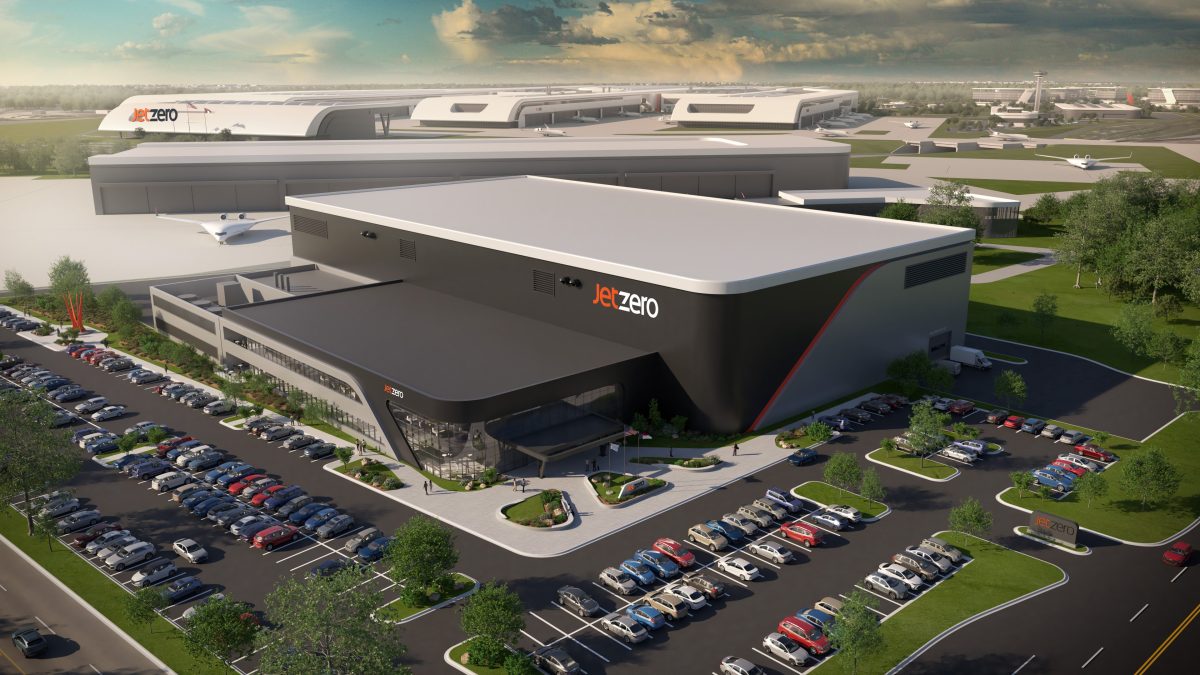
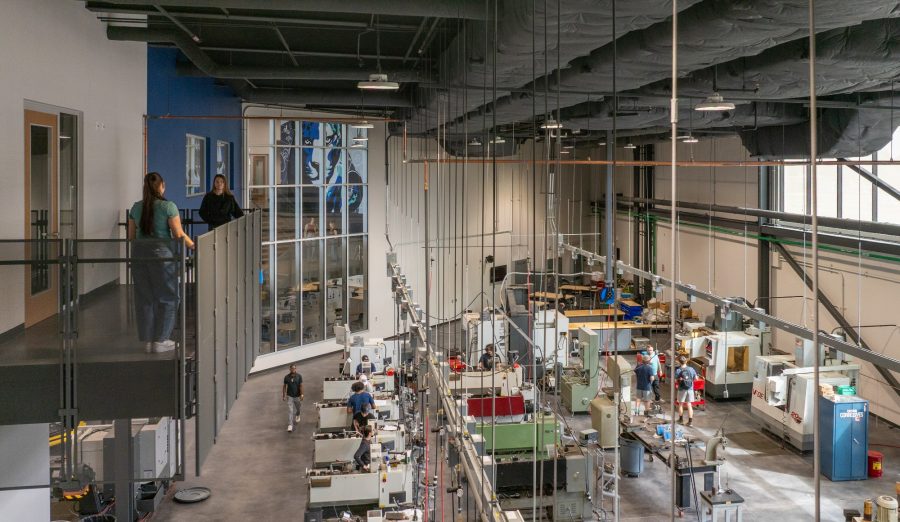
We also see clients make workforce development part of their broader investment strategy. In North Carolina, we recently delivered Johnston Community College’s Advanced Manufacturing Training Facility, which provides hands-on environments for welding, engineering, machining, and computer-integrated manufacturing. Nearby, we’re building JetZero’s new 150,000-square-foot North Carolina Composite Center in Greensboro, the first phase of a planned campus expected to create 14,500 jobs over the next decade that supports workforce training and composites innovation.
Solving workforce challenges requires manufacturers, contractors, educators, trade partners, and communities to work together to create long-term career pathways while continuing to build the experienced technical workforce needed now.
In a rapidly evolving field such as advanced manufacturing, there may be facilities that are the first of their kind. How does HITT adapt to this unfamiliarity and work with the client to devise a functional, scalable operating environment that may exist only as an ambitious concept?
First-of-kind does not have to mean unstructured. We begin by defining what is known, such as the product, production process, performance requirements, and business milestones, and then bring the client’s operators, engineers, equipment manufacturers, designers, and specialty trade partners together to resolve the unknowns.
That adaptability was critical in our work with NVIDIA, where we converted an existing data center shell into a 12-megawatt liquid-cooling environment on a fast-track, design-build schedule. The project included high-density cooling systems that were first-of-kind for the client, which required the design, infrastructure, equipment, and construction strategy to evolve together.
On a first-of-kind project, teams have to be comfortable making progress while some requirements are still being developed. You need disciplined decision-making, clear ownership of open issues, and rapid testing of assumptions so uncertainty does not become disorder. The first facility should also create the standards, lessons learned, and repeatable solutions that allow future facilities to be delivered faster and more cost-effectively. That’s how an ambitious concept becomes a functional facility and a scalable model for growth.
Pictured, at top: The JetZero NC3 facility in Greensboro, North Carolina.
- ◦Development


