



California CRE News In Your Inbox.
Sign up for Connect emails to stay informed with CRE stories that are 150 words or less.
2028 Olympics and Beyond: Talking with Exposition Park’s General Manager
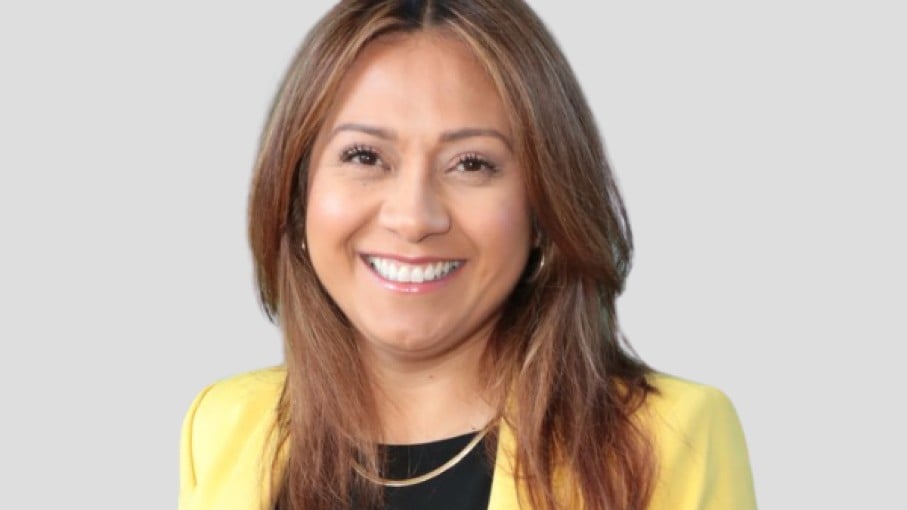
Two years from now, Los Angeles will host its third Olympic Games. As Connect Los Angeles 2026 attendees will learn this Thursday, the LA28 Games have broad implications for the region’s commercial real estate sector. More immediately, the Games will mean operational refinements at the host venues in and around LA, notably Exposition Park. Andrea Ambriz, general manager of Exposition Park, will take the stage for “The Olympics: Opportunities for CRE” at Connect LA 2026; here, she discusses the challenges and opportunities the Games will bring to the 160-acre, state-owned campus—one that happens to be surrounded by a residential area in South LA.
Q: What opportunities do you foresee in hosting the LA28 Games, possibly the largest event Exposition Park has hosted?
A: Exposition Park is the only place in modern history to have previously hosted two Olympiads and two ceremonies. We will make history again as the only site to host three active Olympiads. During the 1984 games, we held about 110,000 people within the Coliseum and certainly more surrounding the area. So the LA28 Games may not be the biggest event that we‘ve ever had here. We’ve hosted HARD Summer here, we’ve hosted NASCAR events, we’ve hosted Martin Luther King, we’ve hosted Pope John Paul II. And I bring these up because it’s really valuable that we have the experience and we know how to hold these major events. As we’re thinking about some of the opportunities to bring people in here safely and accessibly, we think about lessons learned from those previous events.
You’ve heard we’re going to be a transit-first city for the LA28 Games. That means there won’t be a large number of parking spaces available within the Park for the general public. And with the transit-first experience, we have a lot of training to do to prepare. Most people in LA are used to jumping in their cars and rolling over to some type of venue, and if they’re lucky, they can park right in front for premier preferred parking. Alternatively, they might park a couple of blocks away. In this case, people will have to go through various security protocols to get close to some of these venues, because we will be a multi-venue activated site. We will expand our experience with and improve our transit, safety, and accessibility during the Games.
Q: How are you leveraging partnerships with other stakeholders and interest groups for this event?
A: Great question. There are multiple interest groups for these games that require both intentional conversation and negotiation and mediation and brainstorming. So our job is to be as transparent as possible with the challenges we expect and with the goals we have going into these games. For example, how do we balance the residential nature of our neighborhood and the international spotlight that we’re going to host here? To do that, we have to partner with local community organizations and leaders, and then certainly the city.
We’re spending a lot of time thinking through what our infrastructure looks like and how we can prepare to meet this moment, even before we hit 2028. That includes considerations around major accessibility improvements. So we have, as a part of the California governor’s proposed budget, a request and a plan to implement about $100 million in infrastructure improvements. That will go toward major sidewalk repair, major roadway repair, and accessible ramps toward not only accessibility, but also compliance. And to do that, we will work closely with our city partners.
Something as well that we’re really focused on is public safety. And as a state property, we are unique in that state officers have jurisdiction here. We actually have our own police department on campus, too. So, the integration between our own police department with LA28’s broader apparatus, which is going to pool officers from different parts of the state and the country, is very important, and the knowledge base that our officers have is going to really help LA28. It already has.
We’ve also been talking with some local organizations that are actually right across the street from the park. They’re asking us, “How are we going to get there? Can we operate? Is it going to be open? Will we have to close down the doors?” Those are questions that LA28 still needs to answer, but we’re passing on all that information because it is important to us. So we are talking a lot with our different partners at the city level, the residents and also the business community.
Q: This will not be the first international event that Exposition Park has hosted. What are some lessons learned from previous events that you will be putting into play in 2028?
A: Early and often conversations are really key for preparation. We’re lucky in that we’re talking now about the 2028 Games. When I started in this role, it was about three years ago, and this was at the top of every agenda because I knew that there would be a lot of work. The momentum really started picking up after the Milan [Winter] Games. That’s when we started hearing a little more from LA28 about their plans. But even if that momentum really started then, talking early about this big major spotlight that we’re going to have was really important. And that, for example, was key to us being able to get that $100 million so we could move on the construction of some of our needed infrastructure improvements. But that doesn’t just happen overnight. We needed to begin with explaining what we would need, assessing it, conducting some engineering studies, talking with the business community and the construction industry to understand if we were to begin some of this work, what would our timeline be and what are the priority projects.
That took a lot of early work in advance, and I’m really proud we did a lot of that work. I took lessons learned from Paris. I was able to go on an informational tour to speak with the City of Paris teams and then also the Paris 24 teams, and that’s honestly what they told me. The earliest that you can start any of this work is better because about six months before the event, that’s when everything becomes very escalated and moves at warp speed. But at that point, you’re not able to make these big improvements anymore. Now you’re just dealing with the fires and trying to put them out really quickly and trying to make sure you have an opening of a ceremony.
Q: What are takeaways from other Olympic games to apply to the LA28 Games at Exposition Park?
A: In Milan, a lot of the improvements were around accessibility. There was a lot of feedback around the lack of accessibility to reach some of the venues. And we find ourselves in a really opportune space because most of the LA28 venues are in the heart of their communities. So, in light of some of the challenges that Milan experienced around accessibility, we want to do what we can to help people get here and help them experience the park and the games and the events with as little friction as possible. We are the only site in Los Angeles that has two Metro stations onsite, and that’s a really big opportunity.
Given that a lot of the local communities can’t attend these major events, we’re having close conversations about how the Park will be used for the ’28 Games, how the community will benefit, and how the community will be able to attend some of these games. This community is going to be really impacted. Within a half-mile radius, we have about 100 schools. Granted, these are the summer games, so kids aren’t really in classrooms then. But a lot of those campuses become summer schools or community centers and even cooling centers during the summer because it’s so hot around here, particularly in South LA. So we still want to make sure that people can get in and out of the surrounding neighborhood.
Q: What will be the legacy from the LA28 Games at Exposition Park?
A: We want to host an incredible Games experience and an incredible set of ceremonies, of course. But after, people will always ask, “Well, what do we get out of these games?” And what we want to say is we received an upgraded park, which is a part of our Master Plan, and a funded project from Governor Newsom, which we deferred construction on until after the LA28 Games;, we want a destination that people can use afterward: tourists, visitors and residents alike.
I’d also like to see a lot of investment into sustainability around the park, as you saw with the Paris and Tokyo Games. It would be great for us to see legacy improvements coming out of these Games around power and energy. We certainly know the ’28 Games are going to need a lot of lights. We know they’re going to need cameras. We know they’re going to need a lot of generators. So it’s a lot of electricity. Is there a way that we can lift up solar power and energy through this and show the world that we are being really intentional about how we source some of our spaces? I think that would be great.
And then lastly and certainly importantly, safety protocols. Accessibility and safety, other ways that we can make people feel comfortable in this healthy environment—that’s really important to us, too.
On May 28, Connect Los Angeles brings together 600+ high-level owners, investors, developers, brokers, and lenders shaping the region’s market for a full day of insights and networking. Be in the room with decision-makers driving deals across LA, SoCal and the nation—register now: www.connectLA26.com
- ◦Development
- ◦Economy


