




The Expanding Innovation Economy – April 6, 2026
As innovation drives economic growth worldwide, the real estate to house innovative companies is in short supply
Innovation remains a key driver of economic growth domestically and globally, and the definition of what constitutes innovation has expanded. “Having evolved from being almost synonymous with the tech industry in the 2000s and into the 2010s, innovation encompasses the talent, companies and institutions driving the constant re-invention of every facet of the economy, from the digitization of traditional industries such as finance and insurance to healthcare, media, entertainment, manufacturing and education,” JLL says in a new report.
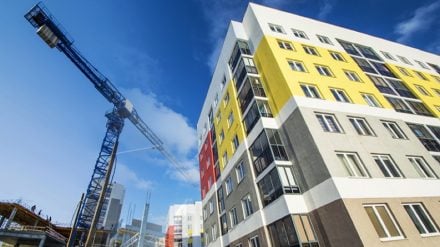
What hasn’t expanded at anything like the same rate is the real estate to house innovative companies. JLL’s latest Innovation Geographies report finds that just 11% of global office space was built after 2020, which means a limited pool of the modern, high-quality buildings that are typically sought by innovative companies.
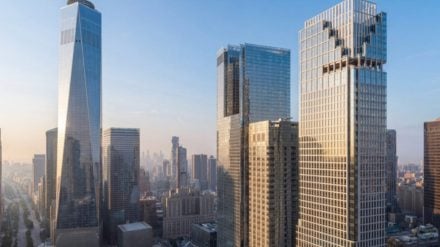
The supply/demand imbalance becomes even more acute in the world’s major innovation hubs, with post-2020 office construction representing only 9% of the inventory in the Bay Area, Beijing, Boston, New York and Seoul. In Paris and London, the new-build CBD vacancy rates have fallen to 0.9% and 1.2%, respectively.
“The geography of innovation has fundamentally changed, with talent and capital dispersing to a wider, more diverse set of cities globally while supply remains constrained in established innovation hubs,” said Travis McCready, head of industries, leasing advisory at JLL. “For corporations, this shifts the priority from simple expansion to a strategic pursuit of quality.
“Successfully navigating this new landscape means finding the right balance of assets through optimization and moving up the quality chain in established markets and expansion into more supply-rich and affordable emerging innovation hubs and — most importantly — recognizing the massive opportunity for investors in developing, redeveloping or retrofitting properties to tap unmet demand,” he continued.
Fortunately, the definition of the innovation economy now covers more territory geographically as well as encompassing more sectors. JLL cites just one market—the San Francisco Bay Area, the once and future king among innovation hubs in terms of talent and investment—as “core.” Outside that elite circle of one are “anchors” such as New York, Beijing and London.
Then there are “reinforcer” hubs, a category comprising 18 cities from Austin to Amsterdam and Shanghai. These markets have seen population inflows 3.8 times higher than traditional centers. “These emerging markets offer companies across sizes, industries and geographies the opportunity to approach real estate decisions not just by city or workplace, but by the surrounding built environment,” according to JLL.
At the same time, the commercial real estate market should consider how to maximize sense of place, amenitization and accessibility to stand out and ultimately shape the future of the global innovation map, the report says. It cites emerging markets that outperform on innovation metrics relative to current real estate investment volumes, and points to “welcomer” markets that have seen accelerated population inflows, such as Nashville and Adelaide. What they may lack in established innovation credentials is compensated for by lower housing costs, cultural presence or business-friendly tax policies.
“Companies are looking for premium office, lab and research space that reflects their innovative nature and attracts key talent to optimize their presence in globally leading cities while unlocking new opportunities in emerging hubs,” said Phil Ryan, senior director, Cities Research at JLL. “The elevation of reinforcer markets and other specialized hubs to a similar status as traditional innovation anchors underscores the importance not only of scale and depth, but also the distinction of industry and lifestyle offerings to attract and retain talent and companies in a competitive global ecosystem.”