



National CRE News In Your Inbox.
Sign up for Connect emails to stay informed with CRE stories that are 150 words or less.


Fed in No Hurry to Cut Rates Further
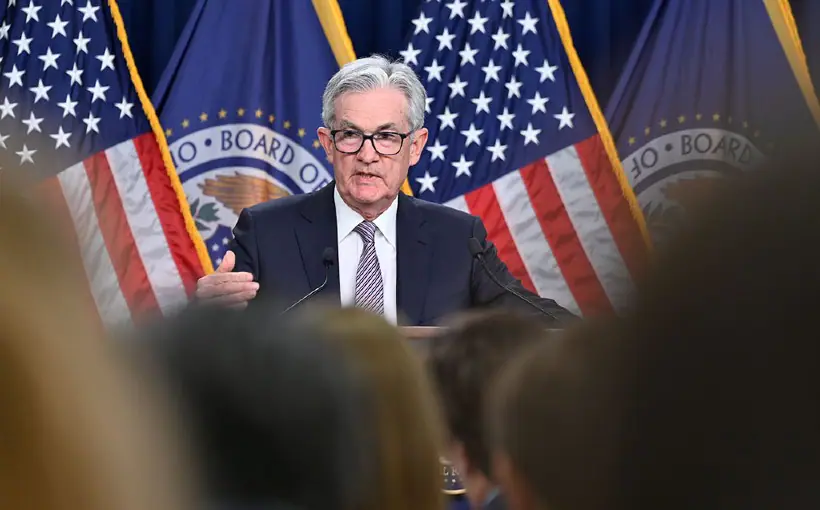
The Federal Open Market Committee (FOMC) left the federal funds target range unchanged at 4.25% to 4.50% on Wednesday, as widely expected, in its first meeting of 2025. The decision to pause breaks a pattern of three consecutive rate cuts, during which the Federal Reserve lowered the target range by a total of 100 basis points since September.
In a somewhat hawkish statement, particularly relating to price pressures, the FOMC statement read that inflation “remains somewhat elevated.” In December, the Fed said inflation has “made progress.” That change was a result of “cleaning up the sentence,” Powell said in the press conference. “It’s not meant to be a signal.”
Additionally, the central bank noted that economic activity has continued to expand at a “solid pace” and the unemployment rate “has stabilized at a low level.”
“In considering the extent and timing of additional adjustments to the target range for the federal funds rate, the committee will carefully assess incoming data,” the central bank said in its statement. The Fed maintained its assessment that the risks to its dual mandate—promoting a strong labor market and controlling inflation—remain “roughly in balance.”
“This is a new phase of the Fed’s easing cycle, given the strong growth and resilient labor market data providing scope for a more patient approach amid elevated data and policy uncertainty,” said Lindsay Rosner, head of multi-sector investing at Goldman Sachs Asset Management. “The Fed’s easing cycle has not yet run its course, but the FOMC will want to see further progress in the inflation data to deliver the next rate cut highlighted by the fact they removed the reference on inflation making progress.”
Powell emphasized in the press conference that the Fed’s current policy stance remains “meaningfully restrictive.” He also highlighted that future decisions will be guided by “real progress” in bringing inflation down toward the Fed’s target or “some weakness” in the labor market.
The pause likely comes as the U.S. economy has remained resilient despite higher borrowing costs. While inflation has moderated, it hasn’t collapsed, and economic growth, along with labor market strength, suggests that aggressive interest rate cuts aren’t immediately necessary.
“Bigger picture, with the economy sustaining momentum heading into the year, consumers remaining in a healthy position, and interest rates still on a path of declining (albeit a bit slower), economic growth should slow a bit, toward 2.0% to 2.5%, but still exceed the growth rates of other key, advanced economies, by a wide margin,” Ryan Severino, chief economist and head of U.S. research for BGO, shared in an email with Connect.
At the same time, the decision to not cut interest rates this time may reflect the heightened uncertainty surrounding President Donald Trump’s policy plans – particularly his proposals to raise tariffs, implement tax cuts, and adjust immigration policies – factors that will influence economic activity and inflation, which in turn will play a role in Fed decisions.
Powell said “things are a little different” in terms of the economic backdrop compared to the first bout of trade tensions during the first Trump administration. Inflation is higher and trade relations have shifted. “The range of possibilities is very, very wide.”
The key question remains whether this pause is temporary, allowing the Fed to assess the impact of previous rate cuts, or if it signals a more prolonged period of stability in interest rates. According to the CME FedWatch Tool, there is nearly an 80% probability that the FOMC will hold steady again at the March meeting. The June meeting currently offers the highest probability of the next rate cut at 46.2%, followed by the July meeting at 44.1%.
The immediate market reaction has been modestly negative in both the stock and bond markets. The S&P500 was down about 0.75% while the U.S. 2-year yield and U.S. 10-year yield rallied about six basis points and three basis points, respectively.
“Over the previous six [easing cycles], at a similar point to where we stood earlier this month, the 10-year Treasury yield generally fell after the beginning of easing, with one instance of it being essentially flat, added Severino. “This time, because the Fed has mismanaged the pace of easing and the associated guidance, the yield is up by roughly 90 basis points to 100 basis points. The yield curve has normalized a bit, but that was clearly not what the commercial real estate market was hoping for.”
- ◦Policy/Gov't


