



National CRE News In Your Inbox.
Sign up for Connect emails to stay informed with CRE stories that are 150 words or less.
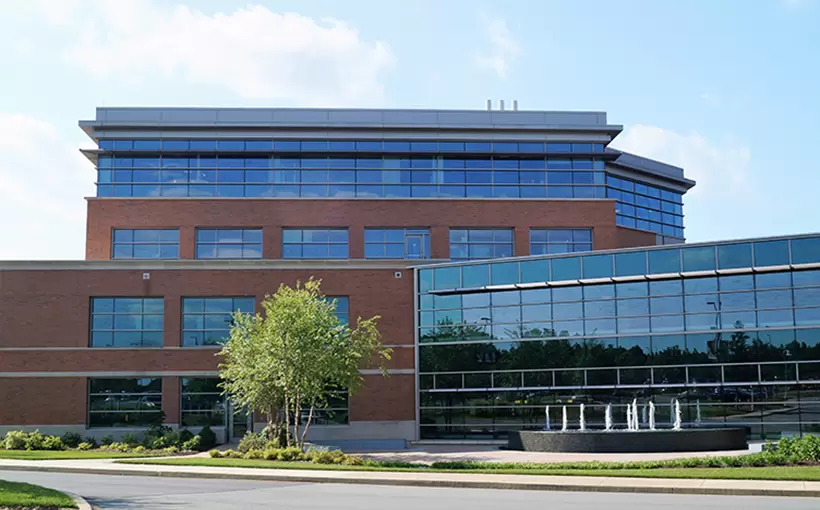

Report Delves into Outpatient Medical Care Sites

Once upon a time, people visited their doctors on carefully coordinated and designed health-system campuses with medical office buildings and a hospital or two.
Fast-forward a few decades, and “outpatient” facilities are becoming the norm rather than the exception. To that end, “a surgery center may be in an office building, a retail center or a hospital,” according to JLL’s just-released report, “Medical Outpatient Building Perspective.”
The report doesn’t necessarily suggest that a retail center or vacant office building owner should rush out and convert that real estate into medical office use. However, it does point out that demographics continue to shift to likely outpatient sites, providing potential opportunities for real estate owners and developers.
Away from the Hospital
Alison Flynn Gaffney, president of JLL’s Healthcare Division, explained that the move from medical campuses to neighborhood locations and outpatient centers isn’t new. It’s been going on for decades. She told Connect CRE multiple factors, including medical technology advances, efforts toward cost containment and patient convenience, were in play.
“Today, the trend is complimented by an overall growing demand for accessible and more timely care for all populations,” she pointed out. “There has been a shift to increased preventive care options to support population health management.” Additionally, she said convenience and ongoing technology and reimbursement charge changes mean it’s easier to conduct procedures in more “neighborhood” locations.
A Limited Number of MOBs
In addition to the above, an increase in financing and construction costs is placing downward pressure on medical office building construction, especially as “health systems and providers face thin margins,” the report noted.
Meanwhile, demand continues to outpace supply, which has been so since Q2 2021.
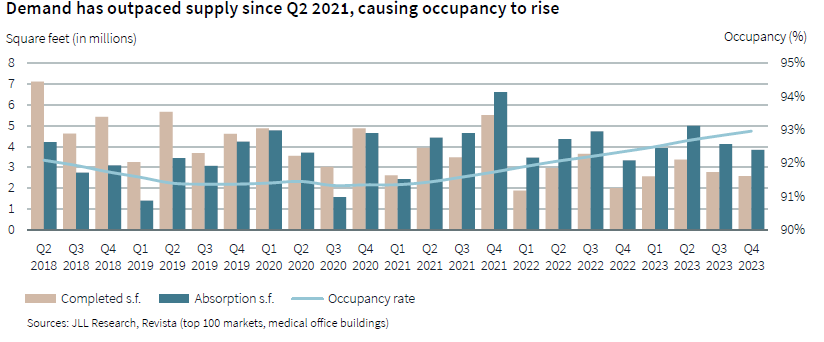
The report explained that “the shift toward outpatient care will increase demand for both on- and off-campus MOBs.” This could mean that health systems might move care to a nearby medical office building or even an outpatient surgery center in the same building.
Meanwhile, as MOB rent continues to grow steadily, this also puts “pressure on landlords and property managers as they address maintenance issues and fund tenants’ improvements amid an environment of rising materials and labor costs.”
A “Good” MOB Site
But before offering up that office building or retail center for potential medical use, Gaffney explained that several factors are in play. Proximity to patients is a must, with “proximity” including distance to major transportation hubs and medical use zoning and permitting.
Furthermore, “retail owners should approach planning, design and construction with specific healthcare architects and experts to meet the specific needs of outpatient care,” Gaffney commented.
Another factor is regulatory compliance, which considers local, state and federal regulations covering healthcare facilities. These include safety codes, accessibility standards and requirements outlined by the U.S. Department of Health and Human Services.
“Legal implications should always be reviewed to ensure compliance and mitigate risk,” Gaffney added.
Takeaways for 2024
The report suggested that outpatient demand will continue to grow. From the healthcare occupier’s point of view, finding opportunities to monetize real estate or partnering with developers can help health systems free up capital for patients. Occupiers can also look for second-generation space or possibly trade free rent for TI dollars.
On the investment side, fundamentals remain strong, and construction slows, “positioning medical outpatient buildings for increasing occupancy and rental rate growth,” the report said. Gaffney added that healthcare facility owners and managers should consult with industry experts and professionals to determine issues like design, construction and legal factors.
“Building and maintaining large, centralized healthcare and hospital campuses can be expensive,” she said. “Smaller, focused outpatient centers or care sites can offer more cost-effective care.” In doing so, it’s important to consider workforce implications and service line offerings within sites. “This will help maximize community impact as well as return on investment,” Gaffney said.
- ◦Development
