



National CRE News In Your Inbox.
Sign up for Connect emails to stay informed with CRE stories that are 150 words or less.

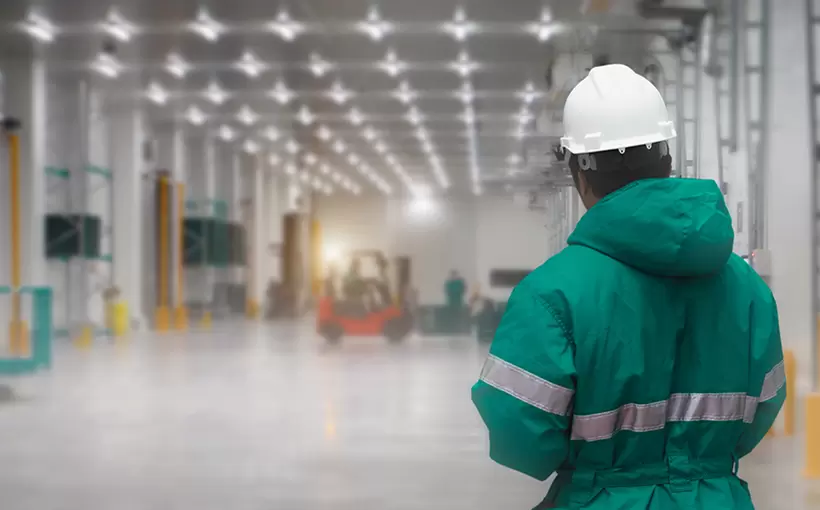

Understanding Cold Storage Facilities: Q&A with Cliff Booth
Cold storage encompasses logistics facilities that help tenants store products (or generate processes) at colder temperatures. To learn more about this asset class and its growing appeal to investors, Connect CRE posed several questions to Cliff Booth, founder and Chairman of Westmount Realty Capital.

Connect CRE: What, exactly, is cold storage real estate?
Cliff Booth: The broad designation covers facilities that can maintain an environment from refrigerated, frozen, deep freeze or all three in the same facility. Each temperature range requires greater infrastructure and building details to support that temperature, increasing in expense with the lower temperatures.
Creating operational cold storage facilities is much more intensive than in a standard industrial building. Many frozen warehouse spaces need a heated floor to prevent condensation from freezing, which could lead to hazardous conditions for those working in the space. Another change to the space includes upgrading the sprinkler system to a dry system, minimizing possible damage if a water-filled pipe freezes.
In the current generation of cold storage facilities, tenants have found great value in storing product higher due to the increased clear heights that are state-of-the-art in the cold storage market. While these facilities require taller ceilings, there are also more government regulations (due to the presence of ammonia used as a coolant) and more costly equipment than dry warehouses.
Keeping a space cold enough to store perishable goods safely also requires highly specialized equipment and skilled workers on-site to ensure the warehouse stays at an optimal temperature. Everything from how the product is handled to the safety of the ammonia used in refrigeration is meticulously regulated, so getting permits can be more challenging, and site inspections are more common than in dry warehouse spaces.
Connect CRE: What fundamentals support this space?
Cliff Booth: Cold storage property fundamentals differ from the broader ambient industrial market by a dedicated user base with its own economics that show up by a facility with specialized capabilities, capital costs and rent expectations. Because of this, the tenants in a cold logistics chain do not usually interact with conventional buildings, which gives the cold markets its own vacancy, pipeline and absorption trends that can be detached from the larger industrial market.
Cold storage seems to be gathering attention in industry discussions as the market takes on more structure. The historical view is still murky when trying to uncover where the demand truly is in the market. And the variety of building capabilities in the built market makes it difficult to determine exact market conditions even though the macro factors about average building age and vacancy look encouraging.
Connect CRE: What should investors consider when considering a cold storage facility?
Cliff Booth: Investors need to look at the tenant’s activities in the market. With such a high cost of development or acquisition, an investor must understand what tenant needs they are looking to satisfy. Unlike some dry markets with a wide variety of tenant uses, the cold market is a comparatively small segment of the industrial market. Specifically, for the acquisition of a cold storage building, it is vital that an investor aligns with a qualified brokerage team who clearly understands the limitations of the building and can set out a realistic leasing strategy.
Typical lease terms for cold storage spaces are at least ten years, which gives investors time to recoup their investment and realize substantial returns. Cold and freezer warehouses can pose a unique set of challenges. Still, at Westmount Realty Capital, we find these highly specialized spaces to be a very valuable investment for all parties.
We see an increase in cold storage deliveries in the next 12 to 24 months, which Westmount intends to participate in. The number of starts will depend on the leasing absorption adjusted to the more significant economic factors that might influence investment and lending.
- ◦Lease
- ◦Sale/Acquisition
- ◦Development


