



National CRE News In Your Inbox.
Sign up for Connect emails to stay informed with CRE stories that are 150 words or less.

Are New Data Centers Becoming Obsolete?
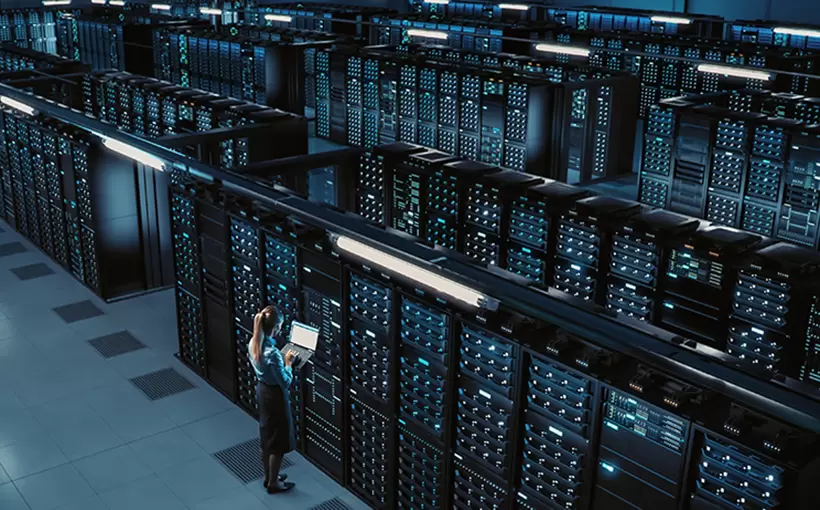
With their row upon row of server shelves combined with the latest equipment, it could be said that the newer data centers are cutting-edge, technology-laden, modern examples of commercial real estate.
Not so fast. A recent article by JLL cautioned that the much-needed data centers currently coming out of the ground worldwide are at risk of becoming obsolete more quickly than anticipated. This is because of the increasing power required to handle ever-expounding data. In quoting Statista, the JLL analysts said the power requirements would double within five years.
The problem here is that data center projects can take up to three years to come online – meaning the design plans of today could well be outdated once that center is up and running.
The (Power) Struggle is Real
The article indicated that data center rack density will grow from 36kW to 50kW per rack by 2027. And that’s just for your standard power. Centers involved with AI training could get as high as 80kW-100kW per rack. This, in turn, will up the need for cooling.
Furthermore, “Higher density implies heavier racks, which affects floorplate loads and footprint, while increased heat generation is resulting in a shift away from traditional air cooling towards various types of liquid cooling,” explained Jordi Sinfreu, JLL’s Head of Data Centers for Southern Europe in the article. “Plus hyperscale, edge and AI all require different mechanical, electrical and design considerations.”
On top of all of this, increasing sustainability regulations and reporting requirements (especially in Europe) mean an increasing need for water and power efficiency.
Potential Solutions
With the lag time involved with the design-build of these centers, attempting to predict what might happen in the future. The article suggested the following considerations:
Phased development approaches. This might encompass adapting the design and layout of floors and halls or moving toward new renewable energy sources as they become available. These could help create more sustainable, agile designs while delaying or avoiding obsolescence. Furthermore, “it allows for greater flexibility as market conditions may change over the duration of the project,” Sinfreu commented.
Capital expenditure and lifecycle planning. Sinfreu said these strategies can allow for upgrades or replacing older equipment, “reducing total cost of ownership, rather than wasting money on maintaining and repairing old kit.”
The right partners. The article pointed out that the right project partner can help mitigate obsolescence risks. Hanayyah Sutton, JLL’s Head of Data Center Projects and Development Services for EMEA, suggested that a global big-picture perspective combined with “boots-on-the-ground” insights could be helpful. As she mentioned in the article, this combines the needed expertise with knowledge about local rules and requirements.
Additionally, “It’s important to think about the complete end-to-end process and the knock-on effects of any design changes,” Sutton said. “Success comes from having clarity, not just in strategic planning, procurement, project management and delivery, but also in post-commissioning operation and maintenance.”
- ◦Development

