



National CRE News In Your Inbox.
Sign up for Connect emails to stay informed with CRE stories that are 150 words or less.
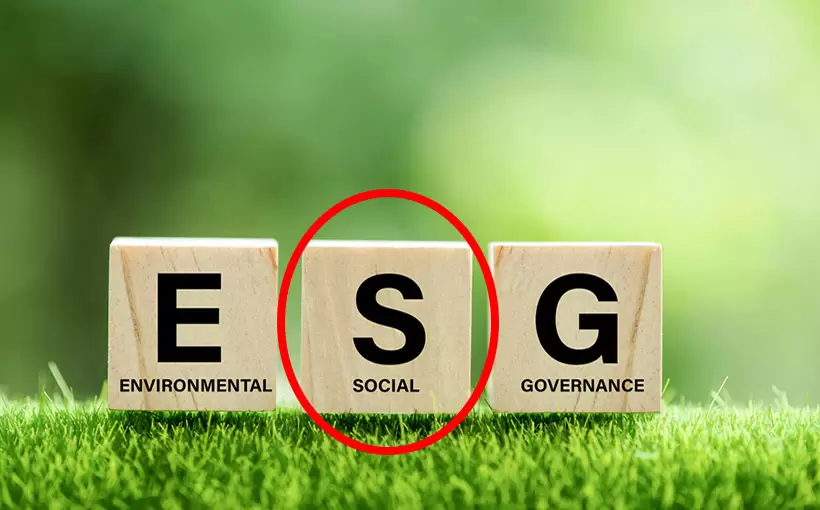

Fitwel’s Social Performance Program Unveiled to Measure ESG’s Intangible “S”

Mention the term “ESG,” and the first (and generally only) thing that comes to mind is “environmental.” There’s a reason for this. It’s easy to measure carbon emissions, power management and water usage.
Things get a little more complicated when focusing on ESG’s “S,” which “stands for social, non-financial risk factors that impact performance,” said Fitwel’s Executive Vice President of Growth, Zach Flora. “This may include inequality, working conditions, community relations, stakeholder quality-of-life or human health.”
Inequality (i.e., through diversity measures) can be calculated. Other social issues, not so much. “S has been historically harder to quantify and systematically define,” Flora told Connect CRE. “So Fitwel set out to define it for commercial real estate.”
The company recently launched phase 2 of its Social Performance platform, which provides a system that generates hard data about the ‘S’ component. Said Flora: “Social Performance creates the ability for real estate companies and investors to apply the Fitwel Standard across all their assets. Said Flora: “It’s not about how high you can score, but rather to understand how a full portfolio optimizes health and therefore maximizes value.”
How it Started
Flora explained that Fitwel works with leading real estate investment managers and REITs to certify “healthy” buildings. These same clients also asked for assistance in measuring the social impact of their ESG initiatives.
Fitwel already had access to 7,000 research studies highlighting how building owners and occupiers could positively impact occupier health and well-being and how specific interventions in this area might create value while mitigating risk.
With these studies, Fitwel joined forces with sustainability advisor EVORA Global to launch its Social Performance pilot program in 2023. Fitwel also engaged other companies, including QuadReal Property Group, BGO, Lendlease, Harrison Street, Vornado, Hudson Pacific, Tishman Speyer and PGIM Real Estate, collecting program feedback.
Through that process, “we learned what these companies needed in terms of efficiency tools and what data they’re looking for to bolster ‘S,’” Flora said.
Homing in on ‘S’ Measurements
Combining research studies and pilot program responses meant Fitwel could roll out the next step: opening the Social Performance program for early adopters.
The hard data comes from metrics slotted into six targeted outcome areas that align with standard ESG reporting criteria. These include:
- Task Force on Climate-Related Disclosures (TCFD)
- Global Real Estate Sustainability Benchmark (GRESB)
- Sustainability Accounting Standards Board (SASB)
- Global Reporting Initiative (GRI)
In addition to the above, program measures focus on real estate issues like community engagement, air quality, climate change resiliency, employee support and public transportation access.
For example, a measure under the climate change resiliency category involves flood-prone zones. “The strategy provides insight on how to protect assets and people who might be in those zones and includes information on how the strategy improves the health of people occupying that particular building,” Flora explained. According to Fitwel research, every $1 invested in flood mitigation can generate a $7 return on investment.
Understanding ‘S’ and Real Estate
Flora pointed out that Social Performance was developed and introduced to help companies focus on asset optimization from an occupier/social point of view. Measures of the typically less tangible “S” can provide more insight into how asset operations can impact the people using them. This, in turn, can help support investment strategies and financial decisions.
Furthermore, the recent pandemic underlined the ties between commercial real estate and its occupiers. “COVID-19 highlighted the power and strength of stakeholders to impact risk and value,” Flora observed. “Those impacts are still being felt, with companies keeping buildings competitive while limiting the risk of stranded assets.”
- ◦Sale/Acquisition
- ◦Development
- ◦People


