



National CRE News In Your Inbox.
Sign up for Connect emails to stay informed with CRE stories that are 150 words or less.


Office Concessions Impact Effective Rent Growth
Over the past few years, oft-repeated fundamentals have defined the office sector. Flight to quality. Increasing vacancies. Falling rents. In a recently released report, CBRE said that record-high concessions influenced rents.
A Base Rent Overview
Base rents, sometimes known as asking rents, represent the starting rent for the first year of a lease term. CBRE analysts commented that base rents for top-tier buildings – Class A and above – increased by 2.6% since 2022. Meanwhile, the base rent for Class B and C buildings “have slipped by 1.0% on average,” according to the analysts.
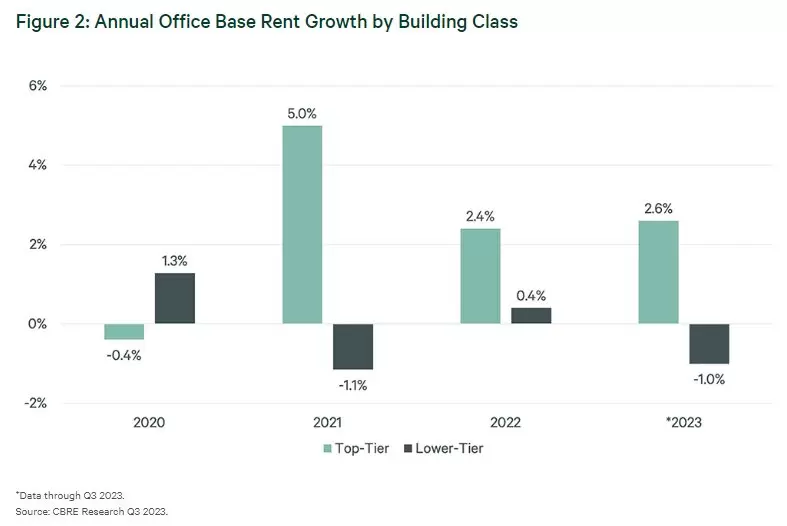
Though these metrics might not generate wild cheers, they’re also not cause for too much concern. But asking rents are only part of the story.
Understanding the Add-Ons
When discussing rents of any kind, they must include incentives, otherwise known as concessions. Concessions are in place to help entice tenants. As the current office market favors occupiers over landlords, it stands to reason that the latter is implementing concessions to attract the former.
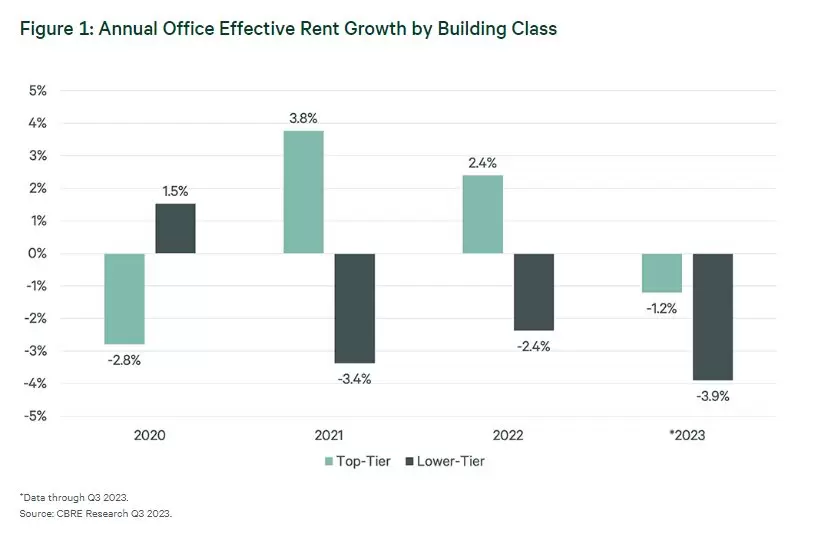
In their report, CBRE analysts point out that effective rents have fallen since 2022. Effective rents for the top-tier buildings dropped by 1.2% in that time and fell by 3.9% for their Class B and C counterparts. The reason, of course, is what the analysts called “record-high landlord concessions.”
TIs and Buildouts
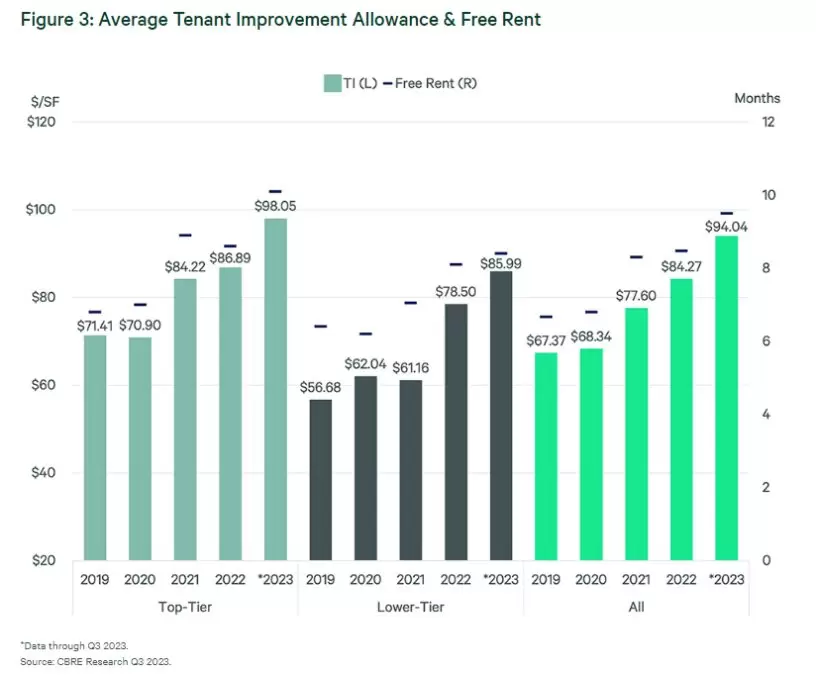
Top- and lower-tier office building landlords boosted tenant improvements from 2022 through Q3 2023. Here’s the breakdown of TI allowances:
- TI allowances for top-tier buildings increased by 13% to $98.05 per square foot from 2022 through Q3 2023
- TI allowances for lower-tier assets increased by 10% to $85.99 per square foot during the same period
Interestingly, tenant improvement allowances increased by 37% for top-tier assets since 2019, compared to a 52% increase among lower-tier assets. The analysts explained that the lower-tier assets don’t offer amenities that tenants want in today’s market. Additionally, they’re in less desirable submarkets. Because of these factors, landlords boosted concession packages to lure tenants and to keep them in place for a while.
The 2024 Forecast
CBRE analysts believe asking rents could decrease by 3% to 4% in the coming year. The analysts also anticipate that concessions should moderate as well. “With higher financing costs and less access to funding, landlords will explore ways to appeal to tenants without offering concessions,” the report said. Such methods might include shared building services, flexible space and expansion and contraction options.
“Stronger demand for top-tier properties is expected to continue as occupiers seek high-quality space in the most desirable submarkets,” the analysts added.
- ◦Lease
- ◦Economy


