



National CRE News In Your Inbox.
Sign up for Connect emails to stay informed with CRE stories that are 150 words or less.

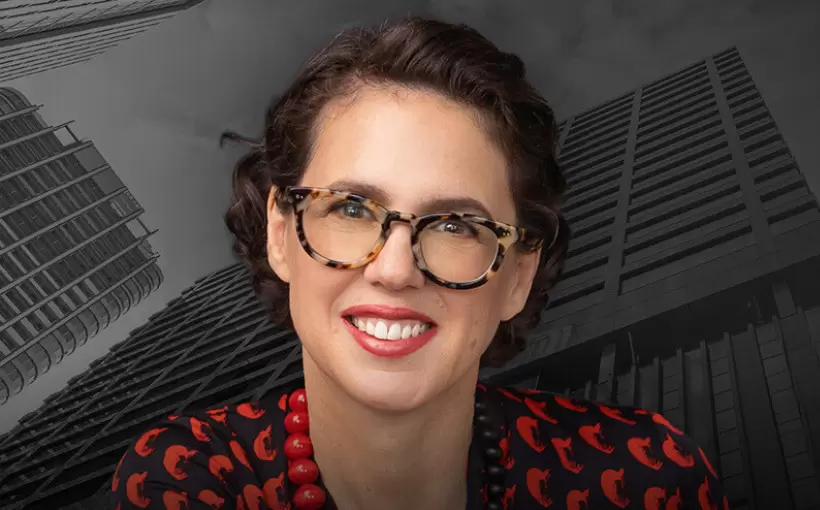
Walker Webcast: Amy Gallo on Resolving Conflict Productively
“Nothing that we do is without other people,” said Amy Gallo on this week’s Walker Webcast. That being the case, the author of Getting Along: How to Work with Anyone (Even Difficult People) noted that conflict can be a byproduct of that interaction. How successfully we manage it can determine the longevity of any interpersonal setting, from the workplace to a marriage.
Walker & Dunlop CEO Willy Walker recalled a recent encounter with a frequent audience member of the Walker Webcast series. The attendee told Walker that he favored the “hard stuff” in the webcasts—i.e., the numbers-driven analysis of guests such as economists Peter Linneman and Mark Zandi. The “soft stuff,” dealing with interpersonal skills? Not so much. Yet it’s just such “soft stuff” that underpins a company’s success, Walker said.
Indeed, Gallo cited a corporate merger on which she was a consultant. Her time spent with the architects of the would-be business combination culminated in a day of brainstorming in which many good ideas were broached—but she remembered thinking, “Those people do not know how to resolve conflict.” The merger ended up collapsing.
“You can’t not deal with this stuff,” Gallo said. The conversation between Gallo and Walker delved into dealing with it.
An overarching approach, in Gallo’s view, is to “think of there being three entities in a conflict or difficult conversation. There’s you, there’s the other person, and then there’s the problem you’re trying to solve.”
“And the problem you’re trying to solve might be a business issue,” she continued. “It might be how you interact. But if you see yourself on the same side of the table trying to solve that problem together, the tone of the conversation and the tenor of it is going to completely change” compared to seeing yourself “in a tug of war with the other person.”
In Getting Along, Gallo discusses four underlying causes of conflict. One is “task or objective,” she said on Wednesday’s webcast. “We disagree over the goal. What are we actually trying to achieve? Are we launching this initiative because we want to improve customer satisfaction or because we want to increase revenue?” That, she said, is “a relatively straightforward conflict comparatively to solve,” since it’s not personal and not necessarily connected to the parties’ egos.
Another type that’s also relatively straightforward, if also more complicated, is process. “So maybe we agree the goal is to increase revenue, but I think we’re going to do that by taking our best-selling product and improving it,” she said. “And you think we’re going to do that by expanding the product line? So it’s a process of how we actually do it. A lot of the process conflicts I see are around how fast we move or how careful we are, quality versus efficiency, for example.”
Moving into “status” conflicts—the question of who gets to make the call—becomes trickier “because then it starts to become connected to our ego,” Gallo said. “Am I in charge? ‘Am I making the final decision in this meeting’ is really what’s happening here?”
Last but not least is a relationship conflict, “where you and I may be disrespecting each other. Maybe we’re exchanging snarky emails or one of us keeps talking over the other in a meeting. That starts to become a relationship conflict.”
The four types of conflict aren’t always neatly compartmentalized. “It’s often a mix,” Gallo said. Similarly, the archetype under which a coworker may be grouped can depend on circumstances and situation—including how you’re behaving toward that coworker.
On-demand replays of the Oct. 4 Walker Webcast are available through the Walker Webcast channels on YouTube, Spotify and Apple.
- ◦People


