California CRE News In Your Inbox.
Sign up for Connect emails to stay informed with CRE stories that are 150 words or less.
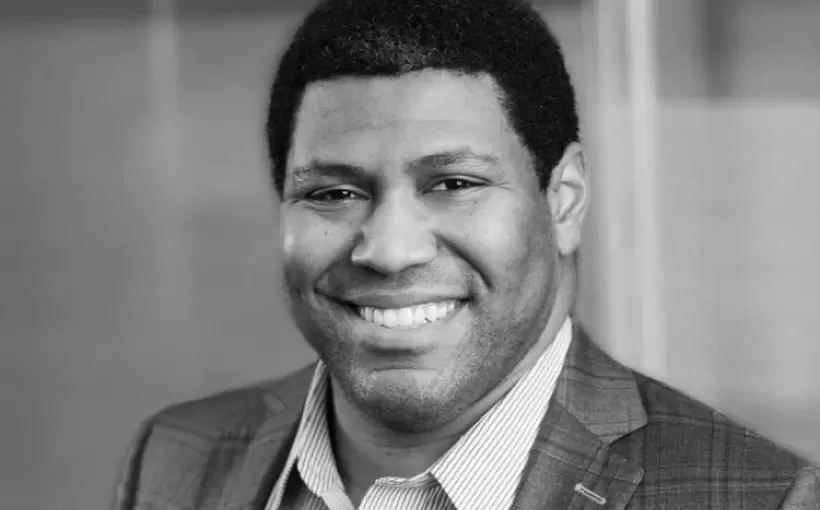

PACE Loan Group’s Bali Kumar: PACE Financing is Like “a Chameleon”
“Financing Deals in an Uncertain Climate” is the title of a panel at Wednesday’s Connect Orange County event, and PACE (Property Assessed Cleaning Energy) financing has proven to be a means of doing just that. Among the experts who will address this topic on Sept. 27 is Bali Kumar, COO of PACE Loan Group. Connect CRE spoke with Kumar to set the stage for the upcoming conversation. Here’s what he told us:
Q: In terms of the reception that PACE financing is getting among borrowers, would you say that people are more open to the idea and do they better understand exactly what it entails?
A: I think people are understanding it more and people are becoming more open to it. But I still think the key element of what we do is education, because there are still a ton of folks who haven’t heard of it or folks who have heard of it and all they know is that it’s not what they’re used to and therefore, it’s complicated and “I’ll keep it in my back pocket in case of emergency.”
But that being said, the PACE market is doubling every year. So whenever there’s a hiccup in the market or however the market turns, people find a way to include it in their capital stacks in a way that suits them best. PACE is sort of the “chameleon of CRE finance,” because in a market where liquidity is tight, people are using PACE to get to a reasonable amount of debt.
I’ve done a couple of deals recently where you have a bank that would have come in at 70% loan to cost, and now they’re only coming in at 55%. And so the bank allows the borrower to bridge to 70% LTC by using PACE to fill that gap. But then in more frothy markets, PACE is used as an equity reducer where banks would provide 70% LTC and the banks allowed the borrower to lever up with an additional 10% of PACE financing, so the borrower is able to achieve 80% leverage.
During the pandemic, we utilized the rescue capital aspects of PACE financing. You can use PACE as rescue capital to help reimburse the property owner for work already completed, or to refinance other debt. For example, during the pandemic, we had borrowers ask: “A year ago, I spent $3,000,000 upgrading windows in my hotel, and now my hotel is empty. Can I use PACE retroactively to pay myself back that $3,000,000 because it pays off over the next 20 years? Then, I can use that capital to fund operating reserves and pay down my senior lender.” The answer is yes. So suddenly during the pandemic, we were doing a lot of rescue capital PACE loans. The same applies now with office buildings – lots of inquiries on PACE as rescue capital. As the market turns, someone uncovers a new use for PACE and then that becomes far-reaching.
Q: So it is not something as straightforward as simply, you know, using it as a mechanism for clean energy upgrades. It has many other advantages as well.
A: Yes. It’s really just commercial real estate finance with a clean energy tint. We actually don’t see many people saying, “I want to do a LEED Platinum project.” They say, “Here are my plans and specs. Do I qualify for PACE? If so, how much?” And it seems that people are building above code anyway, so they’ve unlocked this PACE financing that they’re eligible for. Whether they take it or not is their choice.
Q: One final question. Do you anticipate that within the next nine to 12 months, PACE financing is going to be pretty generally recognized? Or is the education curve still a little steeper than that?
A: It’s hard to predict right now. Everybody’s saying about commercial real estate, “Stay alive until ‘25.” And so before ‘25, people will be scraping and doing whatever they can to fund their deals. That will make people more and more aware of PACE, just like during the pandemic, where a lot of banks really shut their doors for a few minutes and people said, “In that case, we’re going to capitalize using PACE.” Nowadays people are using debt funds and finding that PACE is cheaper than debt funds. So then borrowers are maxing out the PACE financing in their capital stack.
Connect Orange County will take place Sept. 27, 2023 at VEA | Newport Beach Marriott in Newport Beach, concurrently with Connect Healthcare Real Estate on Sept. 27 and 28. Click here to register for Connect Orange County, and here to register for Connect Healthcare Real Estate.
- ◦Financing