



National CRE News In Your Inbox.
Sign up for Connect emails to stay informed with CRE stories that are 150 words or less.
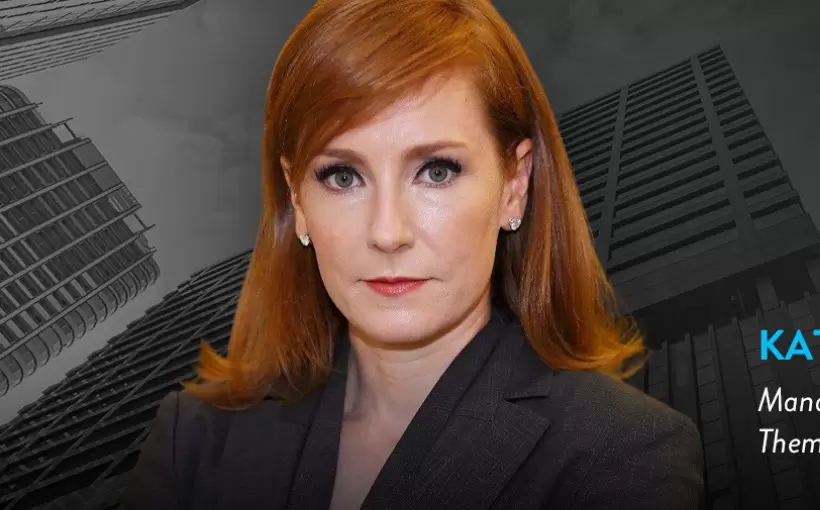

Walker Webcast: The Current Economic Situation and Outlook with BlackRock’s Kate Moore
The last time Walker & Dunlop Chairman and CEO Willy Walker chatted with Kate Moore on a Walker Webcast was spring 2021. Fast-forwarding two and a half years later, Moore, managing director of BlackRock’s Global Allocation investment team, made a return appearance on the Sept. 6, 2023, Walker Webcast.
Much of the discussion focused on “then-and-now,” what Moore said during the April 2021 event and what’s happening. Moore and Walker also discussed artificial intelligence, equity and bond markets, investments in clean energy and cyber-security, and the Federal Reserve’s continued Effective Federal Fund Rate increases.
At one point, the discussion turned to the current consumer spending and retail situation, which Moore called “a mixed bag.” “On the one hand, a company like Dollar General, which really gears to the lower-end consumer, is cutting their profits forecast and giving some warning,” she explained. Then there is Lululemon, which increased its full-year outlook. Best Buy, meanwhile, is promoting a “constructive outlook” for 2024.
Still, “we do know there are a couple of big pressures on consumers, particularly lower-end consumers, over the next few quarters,” Moore said. First, tax refunds to small businesses and others are being cut off. “Without that kind of tax support, you’ll see a decline in spending and retrenching,” she said. Second is the resumption of student loan payments. These payments are coming in at a higher-than-projected number, which “could have a really significant impact on the cohort that is expected to start paying after the moratorium,” she explained.
Then, there are increasing oil prices. “Energy prices disproportionately hurt the lower-end consumer,” Moore said. “We know that will be an issue.”
Speaking of the economy, Moore said there have been improved growth expectations over the year, even with issues like increasing interest rates and oil prices. Though recession fears aren’t off the table, the odds seem lower. She added that BlackRock is forecasting a 3.4% core CPI by year-end, subject to revision. “We expect inflation to come down but not to crater,” she said. While the Fed won’t cut rates immediately, Moore anticipates this could happen in late 2024.
She pointed out that the Federal Reserve Bank of Atlanta anticipated GDP growth at 5.6% during Q3 2023, while Wall Street forecasters put it at 2.1%. “Even if it’s somewhere in the middle, that’s much stronger than many people were expecting three months ago, six months ago or the start of this year,” Moore said.
“The U.S. economy has adjusted by and large to the higher policy rates,” she said. “The idea that this would completely upend consumers and businesses across the board hasn’t played out. You should feel great about the resiliency of the U.S. economy.”
Walker and Moore also addressed the issue of chip manufacturing and onshoring. Anticipated demand for chips, combined with the CHIPS Act of 2022, means that the U.S. needs to build more chip fabrication plants and put money behind companies that deal with chip manufacturing and distribution. Also essential is expanding U.S. expertise in the field. “It’s an addressable market that’s ballooning in size,” she said. “Any policy that supports domestic investment is a good idea.”
On the other hand, while onshoring (and its cousin, nearshoring) is great in theory, “it’s an incredibly difficult process,” Moore commented. There’s more than just building the plant and implementing the infrastructure to make it work. “It’s also about having a continuous stream of workers with the right set of skills for that production,” she said. “There’s all of the ancillary services and businesses that need to exist.” Also necessary are financial, legal and export trade systems. All of these need to be lined up.
Walker concluded the webcast by asking Moore about the “one thing not focused on,” which could be concerning. Her response was the disconnect between small- and large-business optimism.
“For large companies, both the optimism about their prospects in the economy has started to improve, but for small companies, it’s deteriorated,” Moore said. Tightening financial conditions have had an impact on the future growth expectations of these smaller businesses, which are concerned about their ability to obtain financing when needed.
She added that small businesses are the leading employers in the United States and are essential for the economy. While that disconnect between large and small isn’t keeping her up at night,” it’s something that bears watching,” she said.
On demand replays of the Sept. 6 Walker Webcast are available through the Walker Webcast channels on YouTube, Spotify and Apple.
- ◦People
- ◦Economy


