



National CRE News In Your Inbox.
Sign up for Connect emails to stay informed with CRE stories that are 150 words or less.

Bringing It All Back Home: U.S. Manufacturers Ramp Up Reshoring
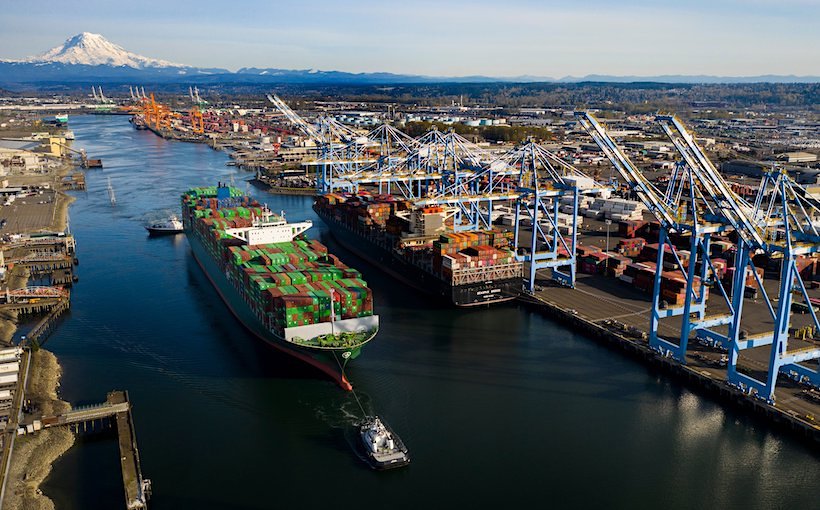
Profits at Ford and General Motors have fallen due to declining third-quarter sales and BMW reportedly is producing certain models of cars without touchscreens, all for the same reason: a chip shortage. Couple that with stories of congested ports and warnings of product shortages for the 2021 holiday season, and you have “the latest chapter in the story of supply chain volatility that has persisted throughout the pandemic, causing extreme pressure on transportation costs and timelines,” reports a Newmark team led by Lisa DeNight.
This volatility coincides with “latent consumer demand, tariffs, geopolitical concerns, and risk mitigation around climate change and natural disasters,” they write. All of this has caused firms to consider restructuring their supply chains for long-term resiliency. “Consequently, U.S. manufacturing reshoring, foreign direct investment (FDI), and domestic expansion are all accelerating.”
Newmark reports that the domestic advanced manufacturing sector is the primary beneficiary of this growth as the number of firms and jobs in this sector proliferate. More than 60% of all new domestic manufacturing establishments to emerge between the fourth quarter of 2019 and Q1 2021 were in advanced manufacturing industries.
“According to the Reshoring Initiative, reshoring and FDI-driven job announcements are projected to reach a historic high in 2021 of 220,000, representing an increase of 38.0% from 2020,” the Newmark report states.
The two sectors which have seen the biggest reshoring numbers—in terms of jobs announcements and year-over-year employment growth, respectively—are transportation equipment and the computer/electronics industry. “These are sectors of manufacturing overwhelmingly localized in Asia, and therefore roiled by oceanic freight cost increases and shipping delays among other catalyzing factors,” according to the Newmark report.
Manufacturers that have depended on a just-in-time supply chain paradigm are adjusting to a “just-in-case” model, the Newmark team reports. Accordingly, some are moving the point of production closer to the point of consumption in an effort to reduce costs and disruption.
“The global supply chain, an intricately delicate network spanning from the planning and initial sourcing of raw materials to the delivery of the final product, often involving multiple countries and shipping methods, can take years to change and is cost-conscious,” the report states. “Some firms doing business in the U.S. may also increase near-shoring to closer countries such as Mexico, to develop a more resilient domestic supply chain at a more affordable cost.
“The shift to a just-in-case supply chain model will be additive, requiring additional U.S.-based industrial real estate demand for mining, manufacturing, warehousing and distribution. Secondary markets are particularly poised to benefit thanks to stronger population growth, lower real estate costs and larger availability of existing space and land on which to build.”
- ◦Economy


