



Texas CRE News In Your Inbox.
Sign up for Connect emails to stay informed with CRE stories that are 150 words or less.
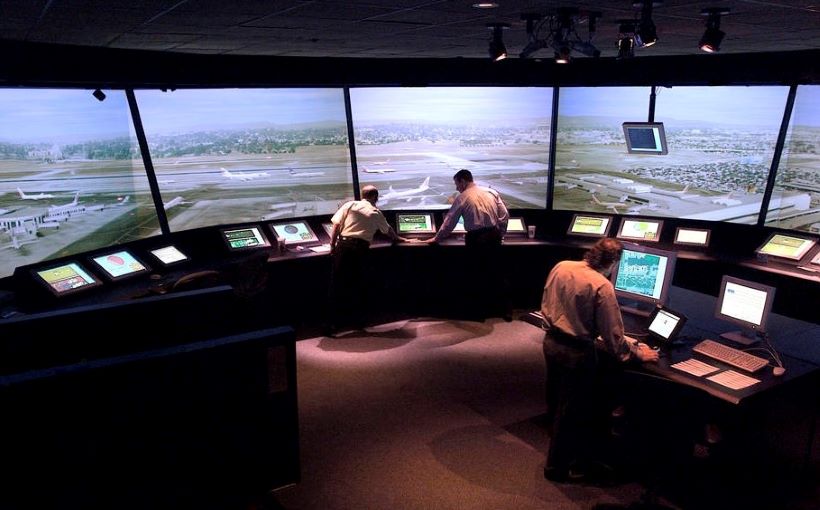

More Efficient Air Traffic Has Wide Array of Benefits
NASA’s Airspace Technology Demonstration 2 (ATD-2) set out to improve the predictability and operational efficiency of the air traffic systems in areas with multiple airports. The suite of airport operations tools known as Integrated Arrival, Departure and Surface (IADS) developed under ATD-2 achieved this goal, demonstrating benefits that include fuel savings, emissions reductions and time savings for airlines and travelers.
By minimizing taxi delay and ramp congestion, ATD-2 demonstrated a reduction in fuel burn and carbon dioxide emissions. These improvements support the goal of building a sustainable aviation system. During testing at Charlotte Douglas International Airport, the program reduced taxi times, helping save more than 275,000 gallons of fuel annually – enough to fly 185 Boeing 737 aircraft between New York and Chicago. The program also reduced greenhouse gas emissions by 8 tons of carbon dioxide daily and reduced delays by 916 hours in four years, equivalent to an average of 15 minutes of wait time on a taxiway for more than 3,600 departing flights.
“The future of flight must be more sustainable and environmentally friendly,” said Stephen Dickson, FAA administrator. “This new capability as part of a flight merging system has a double benefit: It reduces aircraft emissions while at the same time, air travelers experience more on-time departures.”
- ◦Policy/Gov't
