



National CRE News In Your Inbox.
Sign up for Connect emails to stay informed with CRE stories that are 150 words or less.
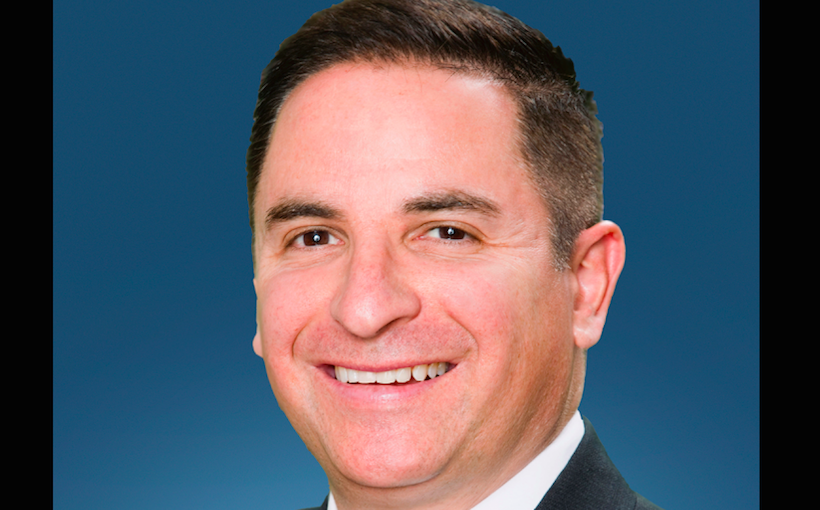

Cox Castle’s Dan Villalpando on Retail Real Estate
By Dennis Kaiser
Tremendous shifts continue to sweep across the retail sector. Nearly every week, headlines proclaim more store closures or detail the struggles facing retailers. The changes are not showing signs of abating, and the underlying issues are ones that mall owners must address.
Connect Media asked Dan Villalpando, a partner at Cox, Castle & Nicholson who specializes in retail development and commercial leasing, to share how to navigate through some of the issues. He explains how some shopping mall owners and developers have shifted their approach to capture more opportunities in our latest 3 CRE Q&A.
Q: What are the biggest challenges for retail developers, given the shift in consumer spending trends?
A: Probably the biggest challenge for retail developers is deriving ways to entice the consumer to make the trip to the shopping center. Once there, studies have shown that shoppers will spend, but the task now is getting them onto the property, instead of shopping at home through Amazon or other online retailers. To encourage visits, retail developers are trying to address parking concerns (by adding parking spaces (if possible), installing charging stations for customers with electric or hybrid cars and creating space for Uber and Lyft “pick up” and “drop off” zones). In addition, retail developers are trying to increase WiFi power within their projects to allow customers to use their devices while on site. This provides a good mix of “bricks” and “clicks” shopping.
Another way retail developers are meeting this challenge is by providing an “experience” for its customers. For example, retail developers who are able to add the hottest new restaurant concepts, entertainment venues and theater concepts, give the customer a reason to turn off the computer or mobile device, and go to the mall to experience something they can’t from home.
Q: What can developers and landlords do to protect themselves?
A: To protect themselves in this market, developers and landlords will want to maintain flexibility and the ability to control their own real estate. For example, if a developer is entering into a lease with a tenant offering a new concept with which it has a limited track record, it is going to want to try to get the right to recapture the premises after a relatively short period of time (2 to 3 years) if the tenant’s business is unsuccessful. At that point, the tenant may seek reimbursement for its tenant improvements, which the developer may be willing to pay just to have the right to recapture the premises and lease it to another concept. The tenant may be amenable to this arrangement as well, because the last thing it wants to do is to pay rent on a space that is not generating income. In addition, it is imperative that developers and landlords avail themselves of as much of the market research as possible to try to find out which uses are important to, for example, “millennials,” and what will potentially bring those consumers to the project.
Q: How have you seen developers adapt to the changing retail market, including the rise of mixed-use developments?
A: In this changing market, we have seen developers adapt in several ways. In some instances, developers who historically have focused on retail have had to get creative with their real estate by offering additional mixed-uses, such as office and residential. This may create issues, like sound and odor attenuation, especially when residential (in the form of apartments or condominiums) are introduced. In other cases, developers who have had larger spaces “given back” (by tenants like Circuit City, Sports Authority, and Linens ‘N’ Things) have had to get creative with their attempts to release the newly vacant space. Some developers have been able to re-demise the space into, say, three or more smaller spaces, for which there is greater interest, particularly with food users. Other developers have elected to introduce medical office use to their projects to fill the empty space, assuming the existing CC&Rs and major leases allow such use.
For comments, questions or concerns, please contact Dennis Kaiser
- ◦Development
- ◦Lease


