



National CRE News In Your Inbox.
Sign up for Connect emails to stay informed with CRE stories that are 150 words or less.

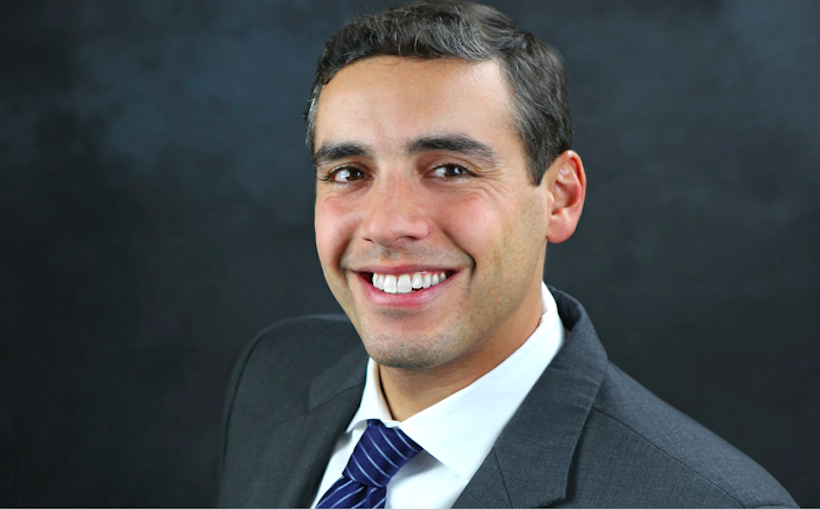

3 CRE Q&A: Calmwater Capital’s Bradley Ross
By Dennis Kaiser
Los Angeles-based Calmwater Capital’s Bradley Ross takes a look at transaction volumes across SoCal in the third quarter and extrapolates out a few takeaways. He shares how the longevity of the current market cycle is playing out in traditional bank’s lending strategies, as well as in the private lending space. He also unveils the hot product types and in-demand markets in Connect Media’s latest 3 CRE Q&A.
Q: Following an uncharacteristically slow summer, many are on a time crunch to close their final 2017 deals. What caused the slow pace of the third quarter? What can be expected of the fourth quarter? Which lenders will be making these year-end deal closes?
A: The slow pace of the third quarter was primarily a result of a decrease in overall transaction volume. Given historically high pricing and a perceived lack of value in the market, incumbent sellers are refinancing, rather than selling, and buyers are waiting on the sidelines for higher yielding opportunities. Non-bank lending volume has increased in the fourth quarter of 2017, as traditional lenders have fulfilled allocations and are scaling back on exposure both in downtown CBDs and new multifamily construction, given concerns over absorption and oversupply in the markets. Well-capitalized private lenders with full discretion over their funds, such as Calmwater Capital, are positioned to provide certainty of execution, creativity and flexibility for year-end closes.
Q: Those in real estate are acutely aware the market is in its second longest growth period in history. How is the industry planning for the end of the cycle? How does this impact lenders – both traditional and non-traditional?
A: Despite the extended growth period, the sentiment across the lending industry is that basic market investment fundamentals have remained intact. That said, many lenders are pulling back in advance of a potential correction. Many bank lenders have decided to stop lending on brick-and-mortar retail altogether. For multifamily construction lending, even some of the big name private lenders are avoiding new projects in areas such as downtown Los Angeles due to concerns over oversupply and absorption. Luckily for borrowers, even as traditional banks and debt funds get more conservative, the private lending space is well-capitalized. Many private lenders are agnostic on property type, location and more, so far as the individual investment is sensible.
Q: With uncertainty in the market, the real estate industry is engaging in a collective brainstorm as to how to deal with “difficult” asset classes such as retail. Which asset classes are providing the greatest number of opportunities? What asset classes should be avoided? What regions are hot? What regions are slowing?
A: As traditional lenders shy away from “difficult” asset classes, contrarian owners, buyers, developers and lenders will capitalize on new opportunities in those markets. Whereas most traditional lenders are hungry for an ever-increasing number of multifamily and industrial deals, these deals offer the most limited spread and most competitive landscape. At Calmwater Capital, we believe the true opportunities can be found in objectively less-desirable sectors (as well as in the traditional sectors), but on a case-by-case basis. For example, we recently closed a retail financing in the greater Denver area, in which we were able to overcome the challenges of a vacant retail center by investing at a low basis with a strong sponsor that has a proven ability to execute their realistic business plan.
For comments, questions or concerns, please contact Dennis Kaiser
- ◦Financing

