


National CRE News In Your Inbox.
Sign up for Connect emails to stay informed with CRE stories that are 150 words or less.

Train Terminals Rebirth as Urban Mixed-Use Destinations
by Dennis Kaiser
Throughout the course of American history, transportation and commerce have been inextricably linked. The industrial revolution saw the proliferation of railroads, which linked cities to other cities and provided outlying rural areas with access to the urban core. Rail was so important to the health of the economy, that grand monuments were built in the heart of major metropolitan areas to house trains and accommodate passengers and freight alike.
Connect Media asked HFF’s Ben Sayles to share why these train terminals are enjoying new prominence today as dynamic, mixed-use assets – effectively serving as the heart and soul of its city.

Q: Over the last several years, how has public transportation impacted the commercial real estate industry?
A: Urbanization is a major driver of today’s commercial real estate market. Millennials generally desire to live and work in the urban core, and many do so without the need for owning a car. This naturally puts an emphasis on public transportation, particularly subway, light rail and commuter rail. As cities continue to densify, vehicular traffic is also increasing, oftentimes faster than roadway capacity. The net result is more time stuck in traffic. Even within the suburban context, pedestrian access to a transit hub often results in above average occupancy, rents and performance.
Q: So, if public transportation is the lifeblood of the new economy, is the infrastructure changing?
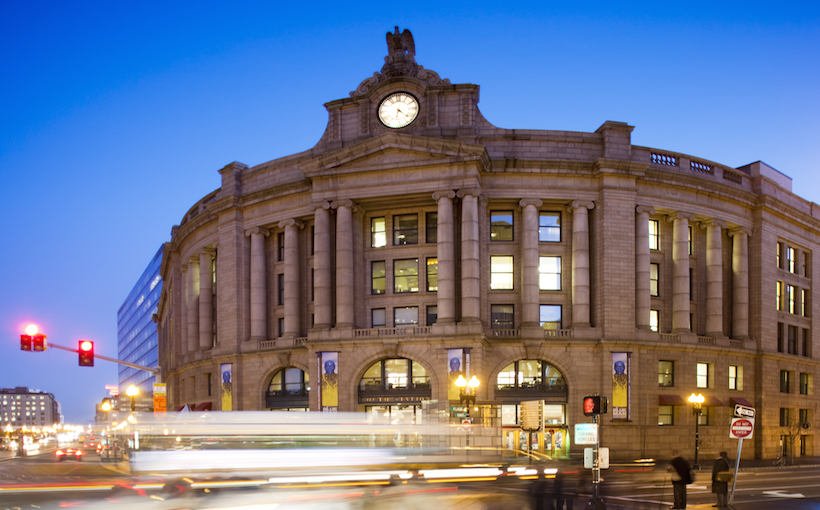
A: TOD (Transit-Oriented Development) is one of the commercial real estate industry’s favorite buzzwords. But, what if you can’t build on land occupied by some of the greatest monuments in the greatest cities (Grand Central Terminal in New York, South Station in Boston, the Ferry Building in San Francisco)? The simple answer has been: you take what’s there and make it better. This task has typically fallen to private developers, who have an expertise in retail merchandising and public space programing.
Q: We understand how vital transit is to the economy, but why are train stations successful as mixed-use destinations today?
A: It’s all about foot fall, or how much pedestrian traffic do these buildings see. For example, South Station in Boston sees traffic of roughly 23.8 million visitors per year. So where else are retailers going to get that kind of exposure to customers? It’s not in the malls. It’s not at highway rest stops. It’s not even on the busiest street in the busiest cities. Airports experience a similar type of captive demand, but they are removed from the urban core and require some sort of transportation to get there. Train stations, by their very nature, are in-fill and walkable. It is also important to point out that these “train” stations are really multi-modal transit hubs with access to subway, commuter rail and regional rail.
 Subscribe to Connect Daily National
For comments, questions or concerns, please contact Dennis Kaiser
- ◦Development


