



National CRE News In Your Inbox.
Sign up for Connect emails to stay informed with CRE stories that are 150 words or less.

CREFC Experts See No Clear Timetable for Cycle
Where are we in the current real estate cycle? That’s a good question with no clear answer, according to a roundtable of experts from the major ratings agencies at the Commercial Real Estate Finance Council’s annual June conference in New York City this week.
The consensus of the ratings agency roundtable—the first that CREFC has convened in a few years—was that no one knows when the cycle will turn. And when it does turn, how long it will last is also an open question.
Ten years ago, the outlook was clearer—and it wasn’t a sunny one. In June of 2008, the capital markets crisis that precipitated the commercial real estate downturn was only a few months in the future, and the collapse of Bear Stearns that March represented an early warning. Among other effects of the downturn, the market for new CMBS virtually dried up.
In contrast, as Trepp CEO Annemarie DiCola told the CREFC audience this week, CMBS has recovered from no issuance to an average of $75 billion to $100 billion per year. And May’s CMBS delinquency rate represented a post-crisis low of 4.12%.
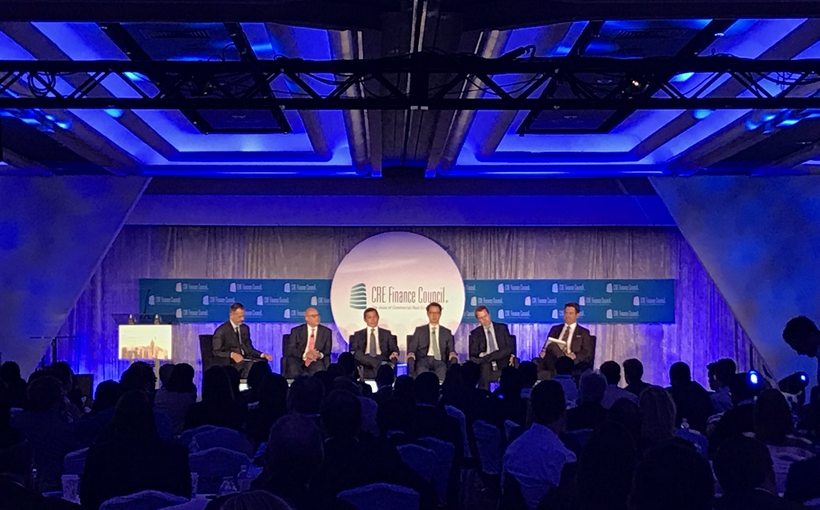
Thanks to the fast-growing popularity of collateralized loan obligations, a panel on CLOs (pictured) was well-attended. These are securitization vehicles for bridge loans backed by transitional real estate, with borrowers primarily interested in flexibility and call protection.
The main difference between today’s CLOs and the collateralized debt obligations of a decade ago, panelists said, was the makeup of the collateral. CDOs were called “kitchen sink” transactions by one panelist, comprised as they were of subordinate B-notes, mezzanine debt and subordinate CMBS. On the other hand, CLOs consist mainly of first mortgages.
For comments, questions or concerns, please contact Paul Bubny
- ◦Financing


