



California CRE News In Your Inbox.
Sign up for Connect emails to stay informed with CRE stories that are 150 words or less.
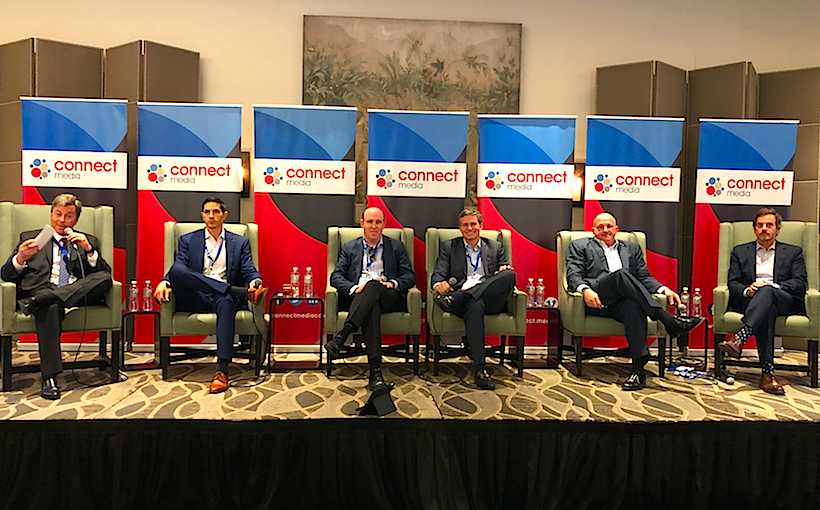

Connect Westside LA Recap: Power Players Navigate Supply Constraints to Meet Demand
By Dennis Kaiser
Connect Westside Los Angeles’ annual gathering on Nov. 27th at the Luxe Sunset drew more than 300 attendees. The Westside Power Players panel featured a group of movers and shakers who shared how the market has evolved and grown into one of the hottest in the country.
The panel, which was moderated by Greenberg Glusker’s Ken Fields, discussed where deals can be found, and space strategies being deployed today to meet tenant demand.
The robust conversation started on how developers are aggregating large enough blocks of land in an urban setting to build projects that pencil. The supply restricted Westside environment from a real estate and government planning perspective is driving investors to acquire large projects in order to gain access to land.
That was the case for Boston Properties’ acquisition of the 1.2-million-square-foot Santa Monica Business Park on roughly 47 acres in Santa Monica. Boston Properties’ Jon Lange says the company viewed it as an opportunity to stretch in order to get a work environment in-demand by tech, entertainment, media and content companies like Facebook, Snapchat, Google, Amazon, Apple, and Activision. Those types of firms are now growing organically in the market,and it has not gone unnoticed by investors. “We’d love to stretch for additional opportunities like that,” he says.
Eastdil Secured’s Stephen Somer agreed the Westside economy has changed to media companies and to larger tenant sizes. In turn, that is driving a bit of the current “land grab and premium investors are willing to pay” to achieve scale in order to meet tenant demand, he notes. Recent deals he cited included Santa Monica Business Park, as well as CBS Television City and others that allow buyers to scale up and offer sites for bigger tenants.
Somer noted in a tight market there could be some opportunities for smaller assets that may fall under the radar of larger private equity funds or foreign buyers. Though it is still “pretty competitive” for big and small deals, he says.
Tishman Speyer’s John Ollen believes those who got in at a low cost basis on the land with a long-term hold approach are in a position to have a winning strategy. “A lot of times the amount of capital required to put in out-kicks the rental rates you can to do, at least in the short term,” he says. The challenges, Ollen notes, is for investors with shorter hold periods, say three to five years, to be able to develop a new project and still generate the rents needed. “If you have a longer hold, you are able to average out the rents you need and can ease into the rents you need.” He pointed out it is really tough to do though, mainly because rents are not keeping up with same pace as other cost considerations.
CBRE’s Jeff Pion noted how fortunate it is to live and work in a marketplace that features one of the most vibrant economies in the world. The challenge for developers and investors, he notes, is it is rare when a property gets sold that they “don’t have to lean into what market rents are going to be in the future.” He notes the next peak will most likely be higher than the last peak, and troughs are always higher than the previous troughs. “But the development process is so brutal and the entitlement process is going to take you years,” he says, though “that’s part of why the market is so dynamic, it is such a supply-constrained market and it is just too difficult to build.”
Ollen says the ability to “create scale” in today’s workspace is vital, though that requires introducing spaces that are “interesting and unique for companies.” That might also mean revisiting overlooked spaces such as balconies to create value or creating a new concepts. One such idea he is testing out is a flex suite, which is a new type of space Ollen describes as a cross between a spec suite and co-working space.
Pion notes a trend he’s seeing now is larger companies more frequently base their location decision on where the talent pool lives, to ensure they have the right employees and to set up organizational growth. Companies have realized that for long-term growth and stability, it is no longer about where the CEO lives, it is more about “where can I hire the intellectual capital and the talent that I need to grow my business.”
Lincoln Property Company’s Kent Handleman agreed that companies know they will have to hire the best talent, which means they must create an environment that works for employees. Rent is less of a factor now, though offering a workplace that helps companies recruit and retain people is critical today, he notes.
Another emerging trend Pion sees is “agile workspaces,” which reflect the collaborative way people work today. He notes the importance of people being together hasn’t changed, but he’s seeing a “blend of live, work, play” environments emerge. Pion says, people want a different workspace that has a ‘story’ and “makes them feel inspired when they show up to work each day.”
Handleman says one of the reasons today’s workforce is attracted to such unique and creative work environments is that they are younger and may not own a home yet. Thus, having an inspiring workplace that they enjoy hanging out at may be a powerful draw for them. That works to the company’s advantage too, from a productivity perspective, especially since employees may decide to spend larger amounts of time there.
For comments, questions or concerns, please contact Dennis Kaiser
- ◦Financing
- ◦Development
- ◦Sale/Acquisition
- ◦Lease


