



California CRE News In Your Inbox.
Sign up for Connect emails to stay informed with CRE stories that are 150 words or less.
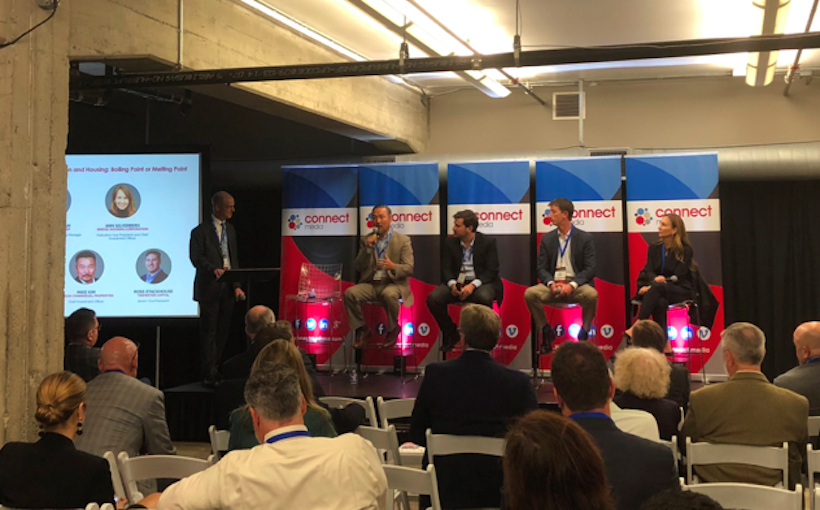

Connect Bay Area: Where Transportation and Housing Meet
By Dennis Kaiser
Connect Bay Area pointed a spotlight on one of the nation’s most complex and active markets. Our annual conference, held on May 17th, 2018 at Galvanize in San Francisco, drew an audience of more than 250 commercial real estate professionals to hear an investment overview, a presentation for BART, and three deep-dive panels.
A panel titled, “The Intersection of Transportation and Housing: Boiling Point or Melting Point?,” featured a spirited discussion of the challenges faced by both the public and private sector. The conversation focused on how the commercial real estate community can face this challenge.
The panel was moderated by Marcus & Millichap’s Steve Seligman, and included Bridge Housing Corp’s. Ann Silverberg, Sares Regis Group’s David Hopkins, Simeon Commercial Properties’ Mike Kim and Tidewater Capital’s Ross Stackhouse.
The panel started with a look back at the past 12 months. Tidewater’s Stackhouse noted that the multifamily climate had changed. He said it was a “familiar story” as rents have flattened in San Francisco over the past 12 to 24 months with zero nominal rents, which equates to a decline, yet construction costs are up 5% to 10% over the the past 24 months. What that means, says Stackhouse, is a project that was viable 12 months ago now is “flat lining, stalled” or the developer is electing to hold off until the next cycle. He says that’s causing some to think two steps down the road by tying up land for the next development cycle.
Kim echoed that condition in the South Bay, noting the only projects going forward now were those funded by off-shore capital.
On the affordable front, Bridge Housing’s Silverberg notes flat or declining rents are “not affecting us because the pricing is so far below market.” Yet, there’s still not enough product being built to meet demand, and costs are soaring. She notes the affordable renter pays roughly $1,700 less than market rate rents.
Sares Regis’ Hopkins shared that while the rest of the country is going “gang busters,” the challenge for Bay Area developers is convincing cities and the community why projects simply don’t pencil despite the high demand. “They just don’t understand how developers aren’t producing enough housing in this economy,” he said.
He did note that walkable projects located within transit corridors are receiving rent premiums, because that is what dominates the movement of people between home and work. Once a project gets off the transit corridor, rents are flat because it is a “different paradigm,” he says.
Hopkins believes the investment into the electrification of the transit system will pay dividends over the long-haul, given it is more efficient than the heavy diesel CalTrain’s with few stops.
One of the ways Silverberg says affordable projects can compete better is through zero-parking projects. That’s because given the soaring costs and challenges competing with market-rate housing, building adjacent to a BART station helps mitigate “some of the cost issues,” she says. As does doing projects with long-term ground leases of 99 years or sometimes in the 65 to 75-year range, though the minimum for affordable is 55 years.
Kim notes an area they’re excited about is downtown San Jose, as a result of all the high tech companies locating there, such as Adobe, Google and Apple. That helps the chase for rent growth as the market gets tighter the higher it goes up towards a peak or peaking condition. He points out the clustering of so many tech bodies bodes well for the downtown San Jose market because of the income volume. He doesn’t believe hard costs will change, so that means higher wages are needed in order to encourage more development.
Stackhouse says they look for land that will pencil without needing to build a high-rise, since concrete and below-grade parking drives the cost up too high. That means building seven or eight stories with structured parking. He noted projects such as 1028 Market in San Francisco’s Tenderloin as an example of that. It is a 200-unit project with no parking, because it is right on top of a BART station and on all transit lines in the City. They hope to break ground in July.
Sares Regis’ Hopkins notes the last few years they’ve been pursuing projects involving land deals with public agencies. That was the case with the Fremont project, with 160-units of housing and another project in South San Francisco along the freeway. They involved former redevelopment agency sites that the cities had inherited, and needed to partner with a private developer to bring the project to life. That’s a model Hopkins sees working in the future, because it creates “win-win’s” for the city, community and developers.
Headwinds facing the Bay Area include the higher cost of construction, which Marcus & Millichap’s Seligman notes, “is a big one.”
But included among the others, notes Kim, are community activism that may be misguided or completely against the development perspective. One consequence of the top-down approach mandated by the state is to remove local control of the development process, as may be the case of SB 35. Developers are all watching Peter Pau’s project in Cupertino as a test case for how this streamlined development approach shapes up.
For comments, questions or concerns, please contact Dennis Kaiser
- ◦Development

Apartment buildings for sale
Check out the latest properties available on apartmentbuildings.com
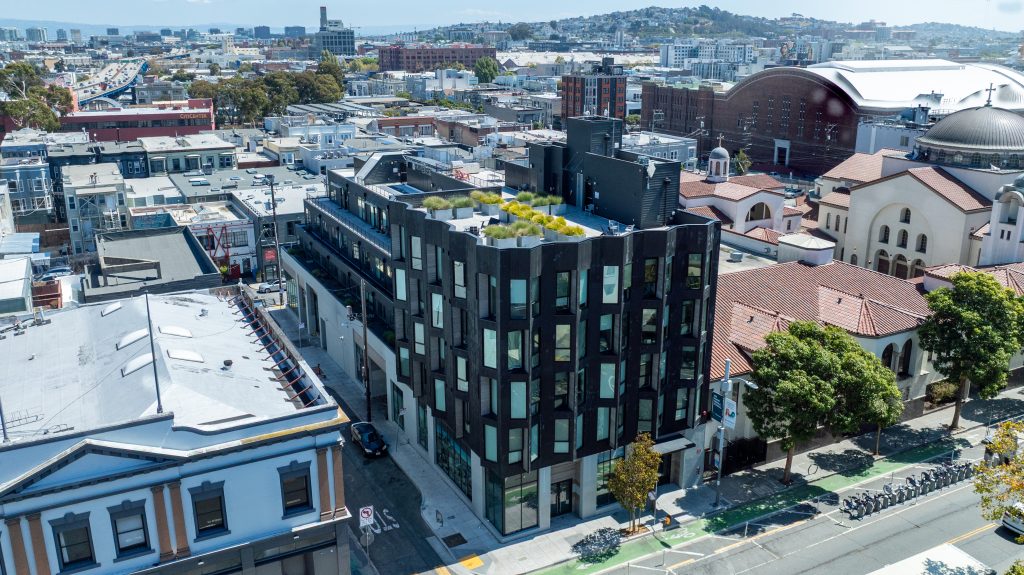
235 Valencia Street
San Francisco, CACalifornia & West + Apartment Buildings
Learn MoreListing Status: Available Listing Type: Highest & best offer Price: $20,000,000 No. of Units: 42 Year Built: 2019 Building Size: 25917 Sq ft Lot Size: 9148 Acres APN: 3532-019B Opportunity Zone: No Price per unit: $476,190 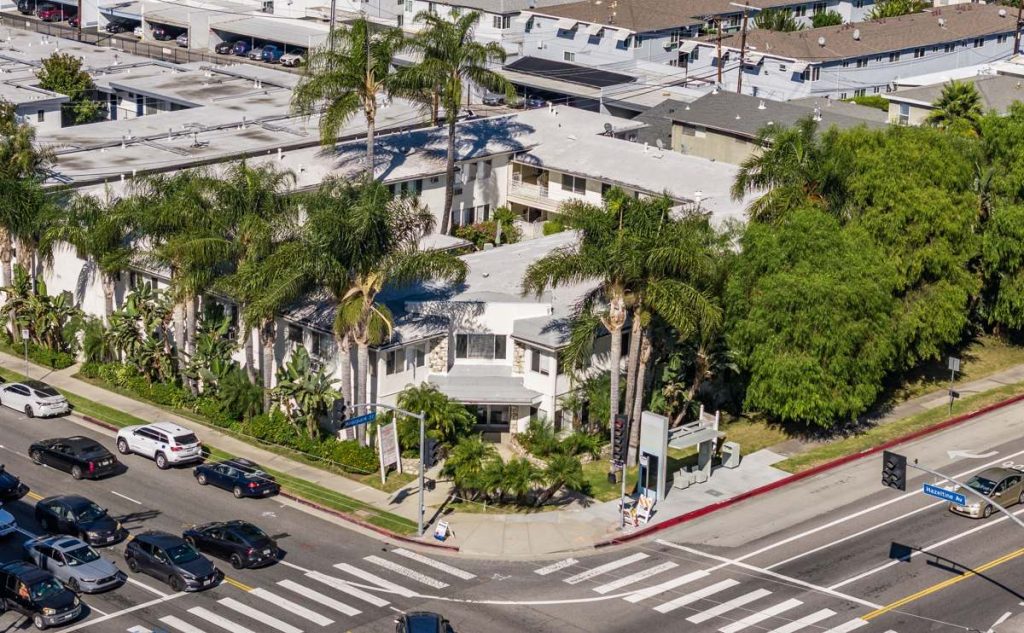
SFR Investment Property Forest Grove OR | 1270 Pacific Ave. 97116
Los Angeles, CACalifornia & West + Apartment Buildings
Learn MoreListing Status: Available Price: $7,490,000 No. of Units: 30 Cap Rate: 5.13 GRM/GIM: 11.39 Year Built: 1956 Building Size: 20182 Sq ft Lot Size: 0.55 Acres Opportunity Zone: No Price per unit: $249,666

