



California CRE News In Your Inbox.
Sign up for Connect emails to stay informed with CRE stories that are 150 words or less.

Adaptive Re-Use Emerges as Hotel Sector’s Hedge Against Risk
The hotel sector in Southern California is booming. Los Angeles County set a record for drawing tourists last year, hosting nearly 50 million visitors in 2017. That was a 2.2% increase over the record 47.3 million tourists in 2016.
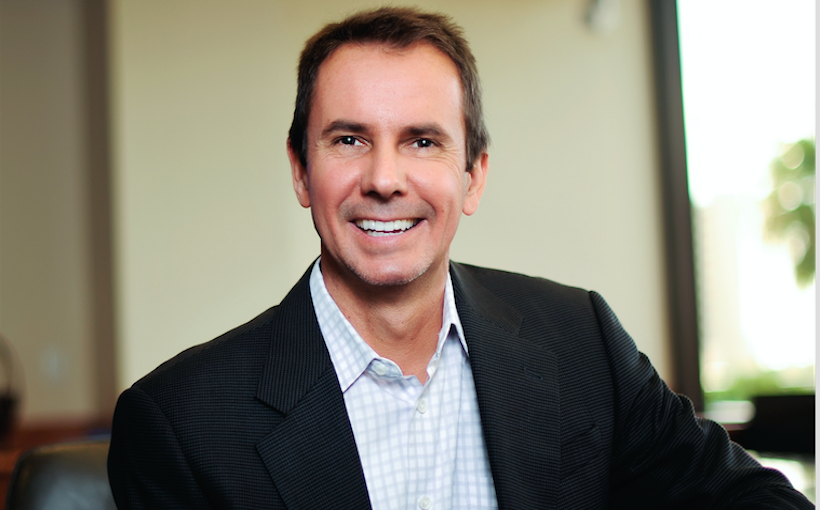
To gain a better understanding of trends shaping the industry, Connect Media asked Bill Wilhelm, President of Irvine, CA-based R.D. Olson Construction, to share insights. The company recently completed the dual-brand H Hotel at LAX, which is part of Hilton’s Curio Collection and Homewood Suites in Los Angeles.
Q: Why has adaptive re-use become more prevalent than new construction in the hotel industry?
A: In the past few years, there has been an increase in demand for adaptive re-use projects over ground-up construction in high-density areas with limited space available for new construction. At R.D. Olson Construction, about 60% of our projects are now in adaptive re-use and large-scale renovations, largely because many of our projects are in the high-demand Southern California market.
In an industry of highly commoditized hotel chains, adaptive re-use gives hotel developments a competitive advantage through the unique character and creative use of space that differentiates these types of buildings. Second, adaptive re-use is more cost-efficient, reducing the price of materials and construction equipment. Furthermore, having an existing structure to build upon makes adaptive re-use a speedier process, allowing hotels to go to market much faster.
Q: In the current economic climate, is adaptive re-use a good hedge against a potential downturn?
A: Yes, adaptive re-use is a good hedge because it allows for much shorter timelines, which reduces the risk that a recession or other economic downturn will happen mid-project and allows the hotel to start becoming profitable faster by getting guests in the door sooner. It also allows for more flexibility to adapt to new trends and changes in supply and demand levels. A smaller investment is required for adaptive re-use, which also is appealing in the case of a downturn.
Q: Are there non-economic benefits to adaptive re-use as well?
A: More than economic gain, adaptive re-use offers social and environmental benefits. Adapting old structures for new purposes allows developers to preserve any cultural and historical significance a site has for the surrounding community. In addition, adaptive re-use projects reduce energy consumption typically caused by demolition, additional machinery and the use and transportation of raw materials. Overall, the energy output for adaptive re-use is much less than ground-up construction.
For comments, questions or concerns, please contact Dennis Kaiser


